Identity, Memory & Becoming
Identity, Memory & Becoming
Filters
Zora Neale Hurston didn't write a love story. She wrote a Black woman's interior life as the primary subject of serious literature — and in 1937, that was an act of radical insistence. Their Eyes Were Watching God gets summarized as a novel about three marriages and a woman looking for love. This guide was built for the room that wants to talk about what Janie was actually looking for, and what the world kept offering her instead.
Three husbands. Three completely different architectures of control. Logan Killicks offers security without desire — practical, stable, and emotionally deadening. Joe Starks is the most unsettling of the three not because his harm is the most obvious but because it is the most polished — he wraps control in ambition, status, and public respectability, gives Janie a position the rest of Eatonville might envy, and erases her systematically from the inside. Tea Cake is the most complicated — the first person who makes Janie feel like a full human being, whose tenderness and whose violence are both real at the same time, and whom Hurston refuses to simplify into a romantic hero or a villain. This guide does the same.
By the end, Janie returns to Eatonville alone, pulls in her horizon, and claims her story. The novel calls that arrival. This kit was built for the room that wants to examine what the arrival cost is, what it means, and whether the question of whether it was worth it is even the right one to ask.
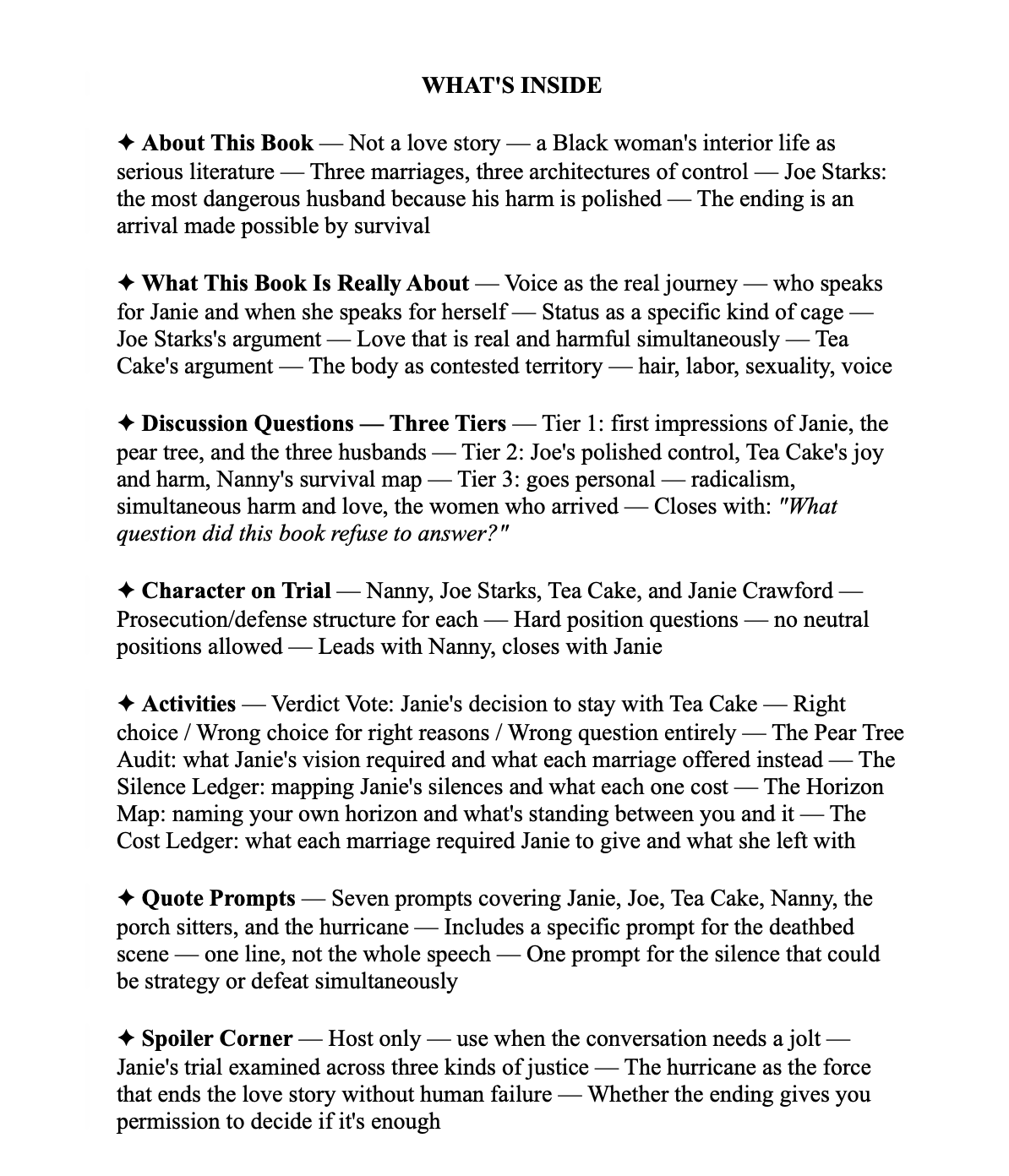
✦ About This Book — Not a love story — a Black woman's interior life as serious literature — Three marriages, three architectures of control — Joe Starks: the most dangerous husband because his harm is polished — The ending is an arrival made possible by survival
✦ What This Book Is Really About — Voice as the real journey — who speaks for Janie and when she speaks for herself — Status as a specific kind of cage — Joe Starks's argument — Love that is real and harmful simultaneously — Tea Cake's argument — The body as contested territory — hair, labor, sexuality, voice
✦ Discussion Questions — Three Tiers — Tier 1: first impressions of Janie, the pear tree, and the three husbands — Tier 2: Joe's polished control, Tea Cake's joy and harm, Nanny's survival map — Tier 3: goes personal — radicalism, simultaneous harm and love, the women who arrived — Closes with: "What question did this book refuse to answer?"
✦ Character on Trial — Nanny, Joe Starks, Tea Cake, and Janie Crawford — Prosecution/defense structure for each — Hard position questions — no neutral positions allowed — Leads with Nanny, closes with Janie
✦ Activities — Verdict Vote: Janie's decision to stay with Tea Cake — Right choice / Wrong choice for right reasons / Wrong question entirely — The Pear Tree Audit: what Janie's vision required and what each marriage offered instead — The Silence Ledger: mapping Janie's silences and what each one cost — The Horizon Map: naming your own horizon and what's standing between you and it — The Cost Ledger: what each marriage required Janie to give and what she left with
✦ Quote Prompts — Seven prompts covering Janie, Joe, Tea Cake, Nanny, the porch sitters, and the hurricane — Includes a specific prompt for the deathbed scene — one line, not the whole speech — One prompt for the silence that could be strategy or defeat simultaneously
✦ Spoiler Corner — Host only — use when the conversation needs a jolt — Janie's trial examined across three kinds of justice — The hurricane as the force that ends the love story without human failure — Whether the ending gives you permission to decide if it's enough
✦ For the Host — Two fault lines: Tea Cake and Janie's passivity — How to redirect the "was Tea Cake really abusive" conversation — How to use the room's judgment of Janie against itself — Timing flow: 90 minutes, Nanny leads, Janie closes — Two room types: Tea Cake defenders and Janie critics
Details: Instant download — PDF delivered immediately at purchase. 20+ pages, print-ready. Licensed for personal and single-group use. Fan-created discussion guide — not affiliated with or endorsed by Zora Neale Hurston's estate or her publisher.
Licensing for classrooms, libraries, and reading programs is available. If you plan to use this guide in an institutional or educational setting, please contact the shop to arrange an appropriate license.
This kit was built for the room that is ready to talk about what Janie was actually reaching for — and honest enough to ask whether she got there.
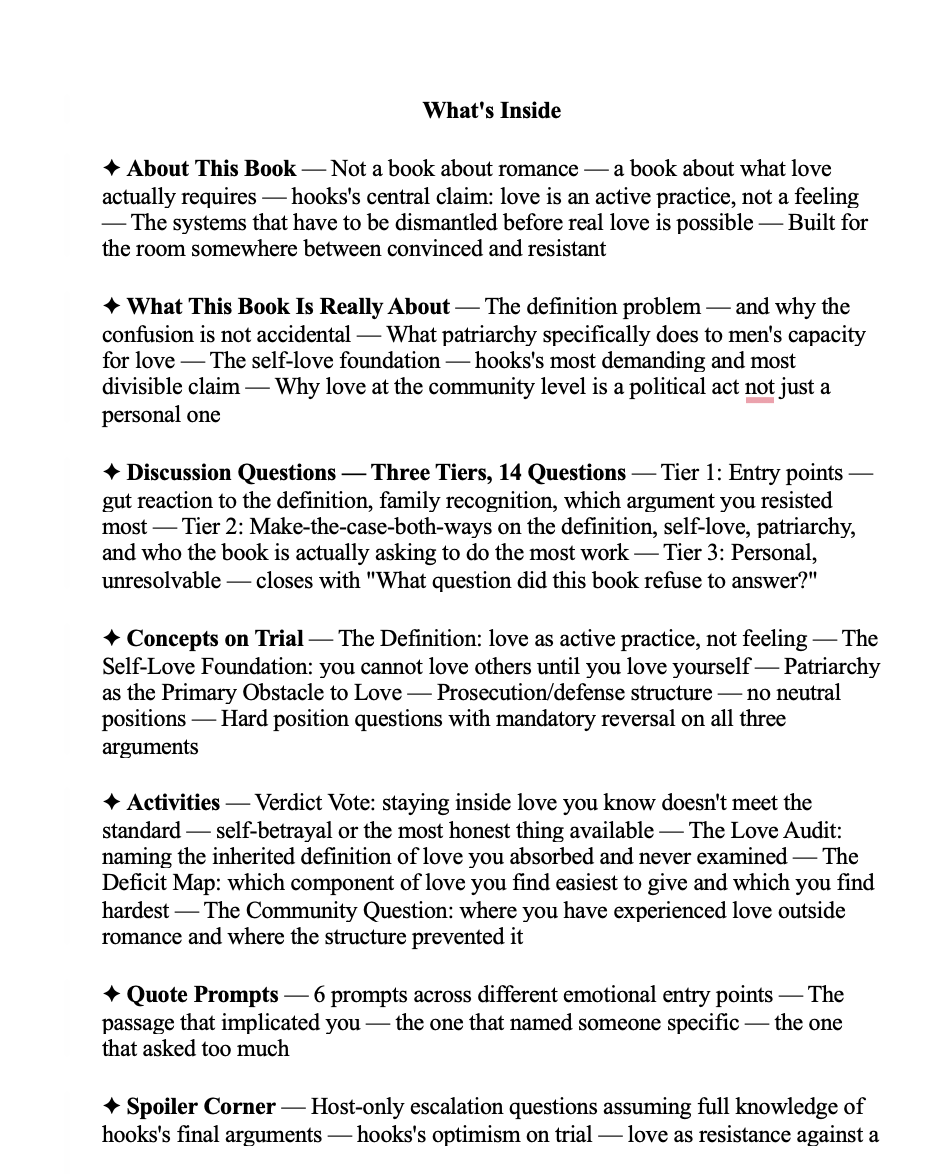
Most books about love begin with romance. This one begins with a definition — and the definition is the argument. bell hooks says love is not a feeling. It is a practice. It is the active choice to extend yourself toward another person's growth through care, respect, trust, honesty, and commitment. If those things are not present, what you have is not love. It may be an attachment. It may be need. It may be habit, fear, or something you were taught to call love because nobody around you had ever seen the real thing either. But it is not love.
That is a hard claim, and Hooks knows it. She is not writing for people who want to feel good about the love they already have. She is writing for people willing to sit with the possibility that much of what they have called love — in their families, their relationships, their friendships, their communities — was something else wearing love's name. What hooks this book, which almost no other writer on love manages, is refusing to let the personal stay personal. The reason so many people struggle to love and be loved is not individual failure. It is systemic. Patriarchy taught men to dominate rather than connect and taught women to accept domination as devotion. Greed built a culture that commodifies intimacy and calls the transaction romance. Self-betrayal gets handed down through generations as the definition of loyalty. Hooks is not interested in helping you navigate those systems more gracefully. She is asking you to dismantle them first.
This kit was built for the room that finished this book, somewhere between convinced and resistant, and knows that both positions are worth examining. Not the room that wants to be validated in what it already believes about love. The room is willing to ask whether what it has been calling love actually meets the standard hooks are setting, and what it would cost to close that gap. That room will be divided. The readers who finish this book feeling vindicated and the readers who finish it feeling implicated are both in there, and the most honest conversation happens when neither side gets to stay comfortable.
What's Inside
✦ About This Book — Not a book about romance — a book about what love actually requires — hooks's central claim: love is an active practice not a feeling — The systems that have to be dismantled before real love is possible — Built for the room somewhere between convinced and resistant
✦ What This Book Is Really About — The definition problem — and why the confusion is not accidental — What patriarchy specifically does to men's capacity for love — The self-love foundation — hooks's most demanding and most divisible claim — Why love at the community level is a political act, not just a personal one
✦ Discussion Questions — Three Tiers, 14 Questions — Tier 1: Entry points — gut reaction to the definition, family recognition, which argument you resisted most — Tier 2: Make-the-case-both-ways on the definition, self-love, patriarchy, and who the book is actually asking to do the most work — Tier 3: Personal, unresolvable — closes with "What question did this book refuse to answer?"
✦ Concepts on Trial — The Definition: love as active practice not feeling — The Self-Love Foundation: you cannot love others until you love yourself — Patriarchy as the Primary Obstacle to Love — Prosecution/defense structure — no neutral positions allowed — Hard position questions with mandatory reversal on all three arguments
✦ Activities — Verdict Vote: staying inside love you know doesn't meet the standard — self-betrayal or the most honest thing available — The Love Audit: naming the inherited definition of love you absorbed and never examined — The Deficit Map: which component of love you find easiest to give and which you find hardest — The Community Question: where you have experienced love outside romance and where the structure prevented it
✦ Quote Prompts — 6 prompts across different emotional entry points — The passage that implicated you — the one that named someone specific — the one that asked too much
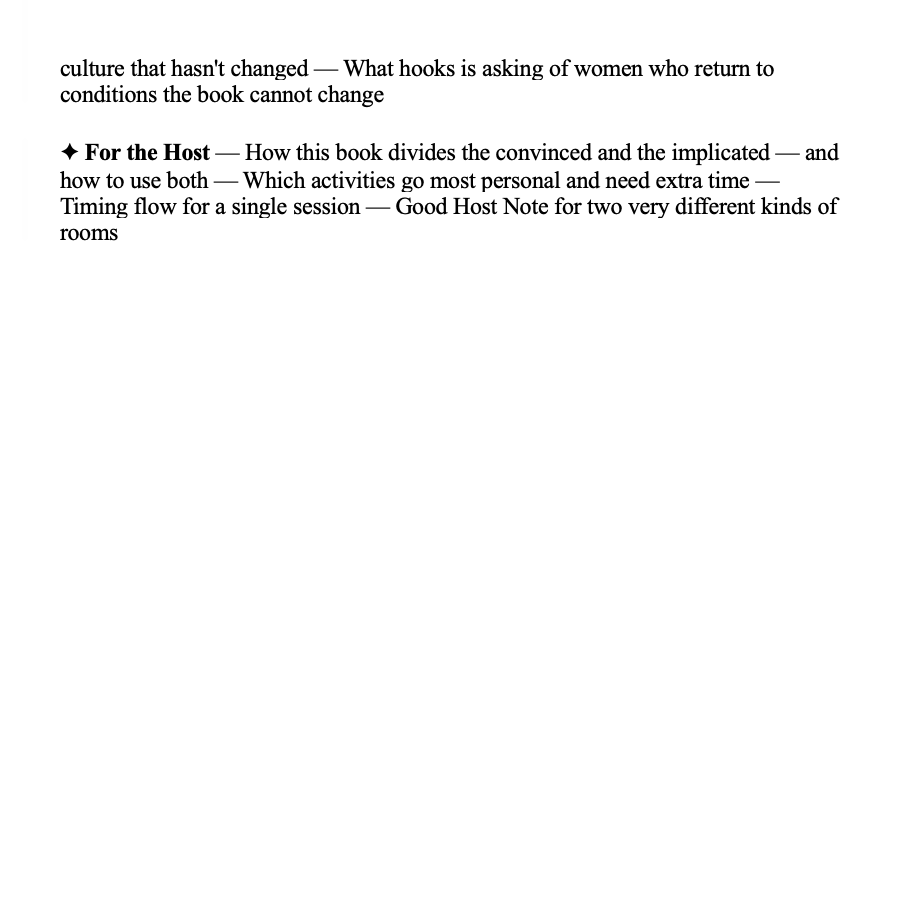
✦ Spoiler Corner — Host-only escalation questions assuming full knowledge of hooks's final arguments — hooks's optimism on trial — love as resistance against a culture that hasn't changed — What hooks is asking of women who return to conditions the book cannot change
✦ For the Host — How this book divides the convinced and the implicated — and how to use both — Which activities go most personal and need extra time — Timing flow for a single session — Good Host Note for two very different kinds of rooms
Details — Instant download PDF — 20+ pages, print-ready — Personal and single-group use — Fan-created discussion guide — Not affiliated with or endorsed by the estate of bell hooks or any publisher
Licensing for classrooms, libraries, and educational programs is available. If you plan to use this guide for a class, reading program, or institutional setting, please contact the shop owner to arrange an appropriate license.
This kit was built for the room that finished All About Love and needed somewhere to put everything it stirred.
Red Lip Theology is part memoir, part theology, and entirely testimony. Candice Benbow is building her faith from the fullness of her actual life rather than from the life the church told her she should be living. From the beauty supply store. From Beyoncé. From her queer friends. From her own desire. From her grief. From the red lipstick that Black women have always worn as armor and dignity, and the refusal to be diminished. She is not asking to leave Christianity. She is asking to claim it in its entirety, as a Black woman whose life has been her most honest theological text.
This kit was built for the room that knows exactly what Benbow is talking about. For the woman who is still in the pew and still carrying questions the church never made space for. For the woman who left and is still sorting out what she took with her. For the woman who finished this book thinking about her mother — or her grandmother, or her church mother, or her mentor — and the specific cost that woman paid to pass on faith to her. All three women are in this room. All three deserve space to speak without being managed toward a conclusion.
The discussion will be divided. Not between people who love the church and people who don't — that divide is too simple for what Benbow is doing. It will divide women at different points in their own faith journeys, holding different things from the same institution, with varying levels of peace about what they hold. Both the prosecution and the defense of the Black church are in this kit. Neither is dismissed. The goal is not a verdict. The goal is the honest examination Benbow is modeling — holding up what you were given and deciding consciously what belongs to you.
A note on audience: This guide was written specifically for Black women who have experienced the Black church. It engages Benbow's arguments directly — including her arguments about sexuality, purity culture, and the LGBTQIA+ community — without softening them for a general audience. Please consider your group's readiness for this material before purchasing.
What's Inside:
✦ Content Warning — The shame of unmarried motherhood in the Black church — Sexual shame and purity culture — LGBTQIA+ identity and institutional rejection — Grief and unexpected loss — The specific harm of being told by a faith community that who you are is not acceptable to God
✦ About This Book — Not a systematic theology and not a manifesto — A testimony service in essay form — A mother who kept giving her daughter God through an institution that used God against both of them — The red lip as armor and dignity and the refusal to be diminished — Built for the room that knows exactly what Benbow is talking about
✦ What This Book Is Really About — On the surface / Underneath — The shame asymmetry — the church finds the person it can see and it can always see the woman — What a mother passes to her daughter through a faith that has also hurt her — Grief as the test that reveals what actually holds — The sacred in the spaces the church says God is not
✦ Discussion Questions — Three Tiers — Tier 1: Entry points including the humor that opens what solemnity cannot — Tier 2: Make the case both ways — queer friendships as theological necessity, refusing shame versus building a theology, finding God in secular spaces, grief as teacher or distortion, the difference between what Debra gave and what the church gave — Tier 3: Personal uncomfortable unresolvable — Closes with: What question did this book refuse to answer?
✦ Character on Trial — The Shame of the Unmarried Mother: what the shame was actually protecting and who it was actually serving — The Faith Debra Gave Candice: the same faith grown into fullness or two faiths that share a root but grew in different directions — The Red Lip Theology: permission without direction or the prerequisite for everything else — No neutral positions allowed — Final synthesis: is what Benbow built enough to pass to the next generation the way Debra passed hers to Candice
✦ Activities — The Inheritance Audit: one thing keeping and one thing examining named out loud — The Testimony: one sentence true about your experience of God or the church that the church never made space for read aloud — The Mother: name the woman name the gift name what she paid — The Personal Reckoning: where you are right now in your relationship with the Black church — Verdict Vote: is the faith Debra gave and the faith Candice built the same faith — and is what Benbow built enough to pass on
✦ Quote Prompts — Six prompts six emotional entry points — The passage that made you laugh first and what the laughter opened — The Debra passage where she was most herself — The body passage and what it stirred — The passage where you found God somewhere the church said God was not — The sentence that has stayed with you — The passage that made you think of a specific woman in your life and what she paid
✦ Spoiler Corner — Host only — Full knowledge of the entire book required — What Debra's faithfulness reveals about what she actually believed about God on her own terms — The humor as theological position and as protective distance — Benbow's ending as invitation versus what the church owes the women who kept showing up
✦ For the Host — Three fault lines: where each woman is in her relationship with the church the mother thread and the LGBTQIA+ argument — Special guidance for rooms still fully inside the church — Special guidance for rooms that have largely left — The Testimony as the great equalizer — Timing flow for a single session
Details: Instant download — PDF format — Personal and single-group use — Fan-created discussion guide — Not affiliated with or endorsed by Candice Marie Benbow or any publisher — 20+ pages print-ready
Content note: This guide discusses the shame of unmarried motherhood in the Black church, sexual shame and purity culture, LGBTQIA+ identity and institutional rejection, and grief and unexpected loss. This guide was written specifically for Black women who have experienced the Black church. Please consider your group's readiness for this material before purchasing.
Licensing for classrooms, seminaries, and faith community programs is available. If you plan to use this guide for a class ministry program or institutional setting, please contact the shop owner to arrange an appropriate license.
This kit was built for the room that finished Red Lip Theology and needed somewhere to put everything the book left in them. It was built for the conversation that starts with what the church cost the women who kept showing up and ends somewhere none of you expected.
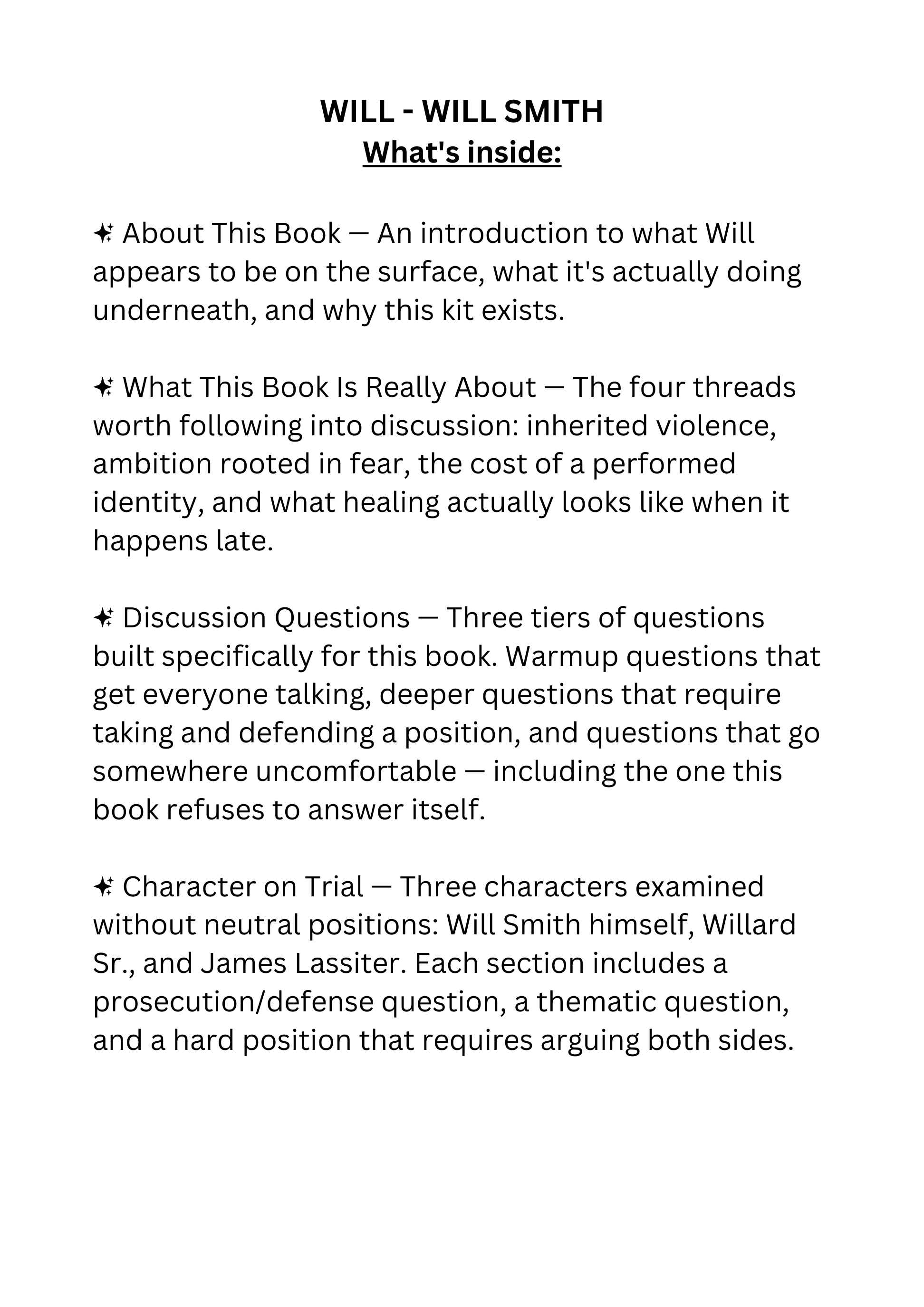
Will Smith has spent decades being the most likable man in the room. Will is the book where he stops performing that and starts asking why he needed to in the first place.
This is not a highlight reel memoir. It goes into his father's violence and the patterns Will inherited without knowing it. It goes into the women he loved and tried to reshape. The friendships that ended quietly, with no explanation — just gone. The fear underneath every ambition. The therapy, the ego, the long slow work of learning to actually feel something instead of producing a feeling for an audience. He narrates the audiobook himself, and that precision matters — this reads less like a product and more like a confession that took decades to be ready for.
The questions this book raises — about whether self-awareness changes behavior or just describes it more articulately, about what we inherit from people who hurt us, about what it costs to maintain an image for thirty years — don't get answered cleanly. Your book club gets to finish that work.
✦ About This Book — what this memoir appears to be versus what it's actually doing
✦ What This Book Is Really About — four threads worth following: inherited violence, ambition rooted in fear, the cost of a performed identity, and what late healing actually looks like
✦ Discussion Questions — three tiers built specifically for this book, from warmup through the questions that go somewhere uncomfortable
✦ Character on Trial — Will Smith, Willard Sr., and James Lassiter examined without neutral positions
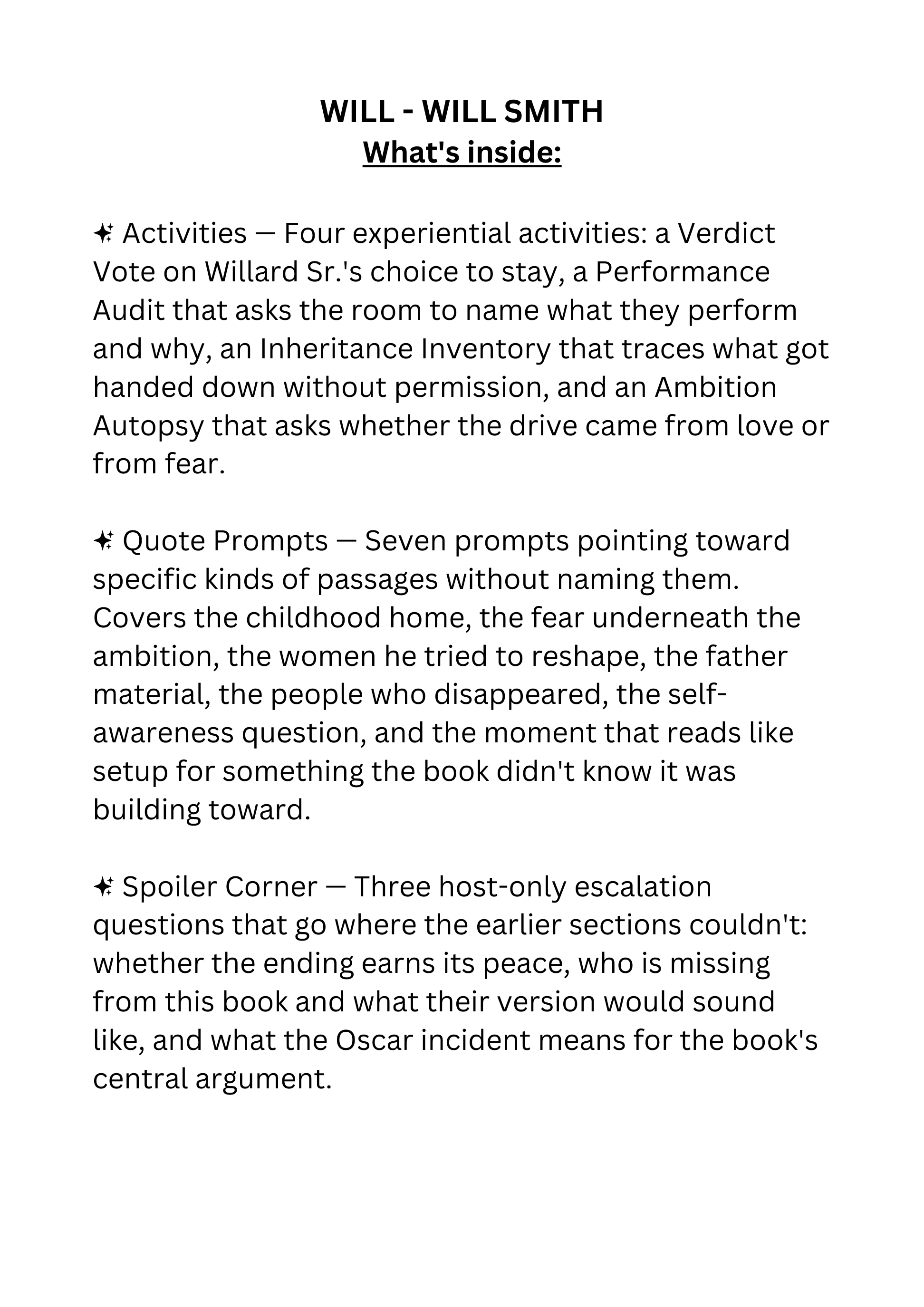
✦ Activities — Verdict Vote on Willard Sr.'s choice to stay, Performance Audit, Inheritance Inventory, and Ambition Autopsy
✦ Quote Prompts — seven prompts covering the childhood home, the fear, the women, the father material, and the moment the book didn't know it was building toward
✦ Spoiler Corner — host-only escalation questions including who is missing from this book and what their version would sound like
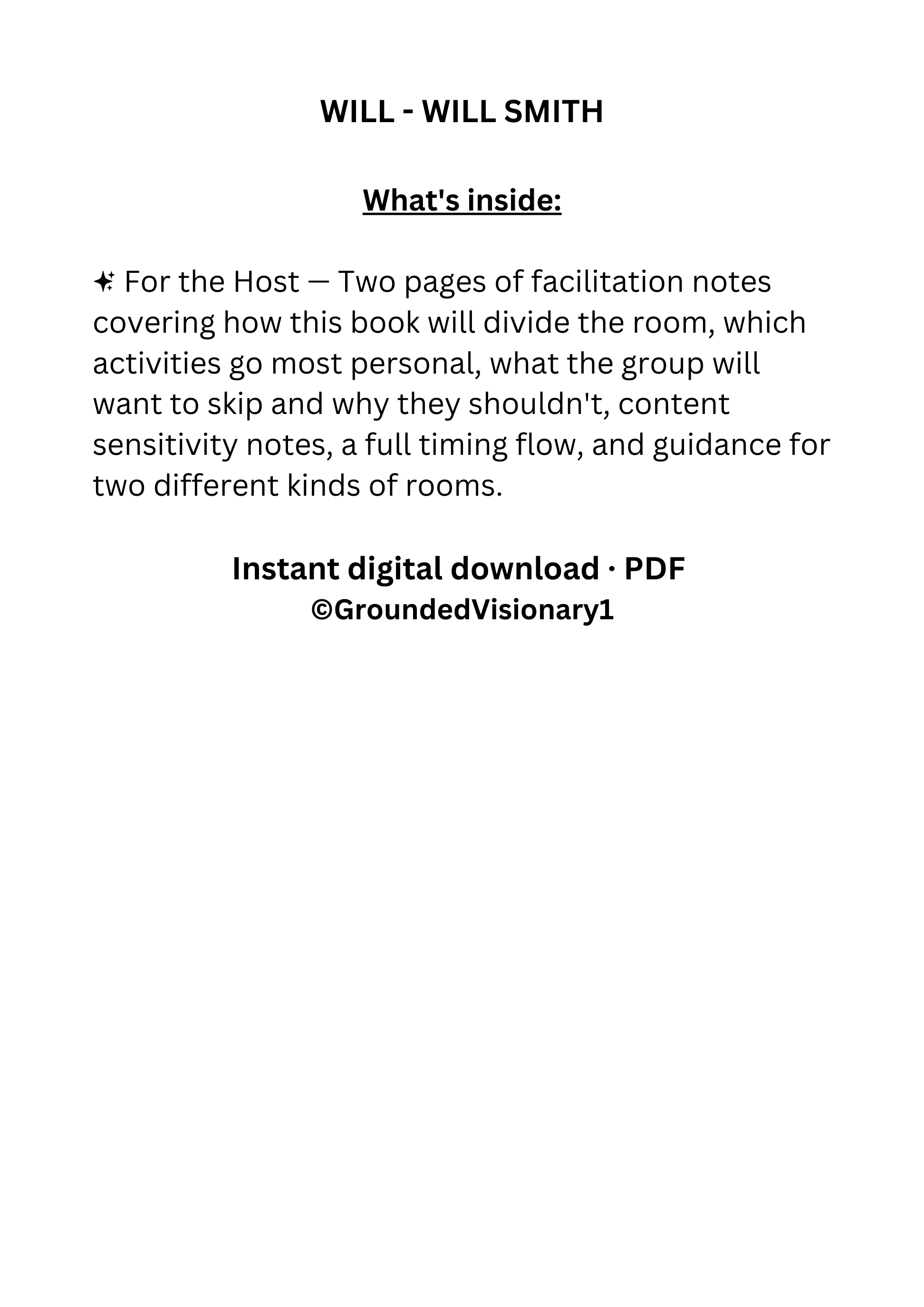
✦ For the Host — facilitation notes, timing flow, and guidance for two different kinds of rooms
Details: Instant download. PDF delivered immediately after purchase. 20+ pages, print-ready. Personal and single-group use. Fan-created — not affiliated with Will Smith or his publisher.
For classrooms, libraries, and educational programs — contact the shop for institutional licensing.
Built for readers who finished this book wondering whether the peace he found at the end actually holds.
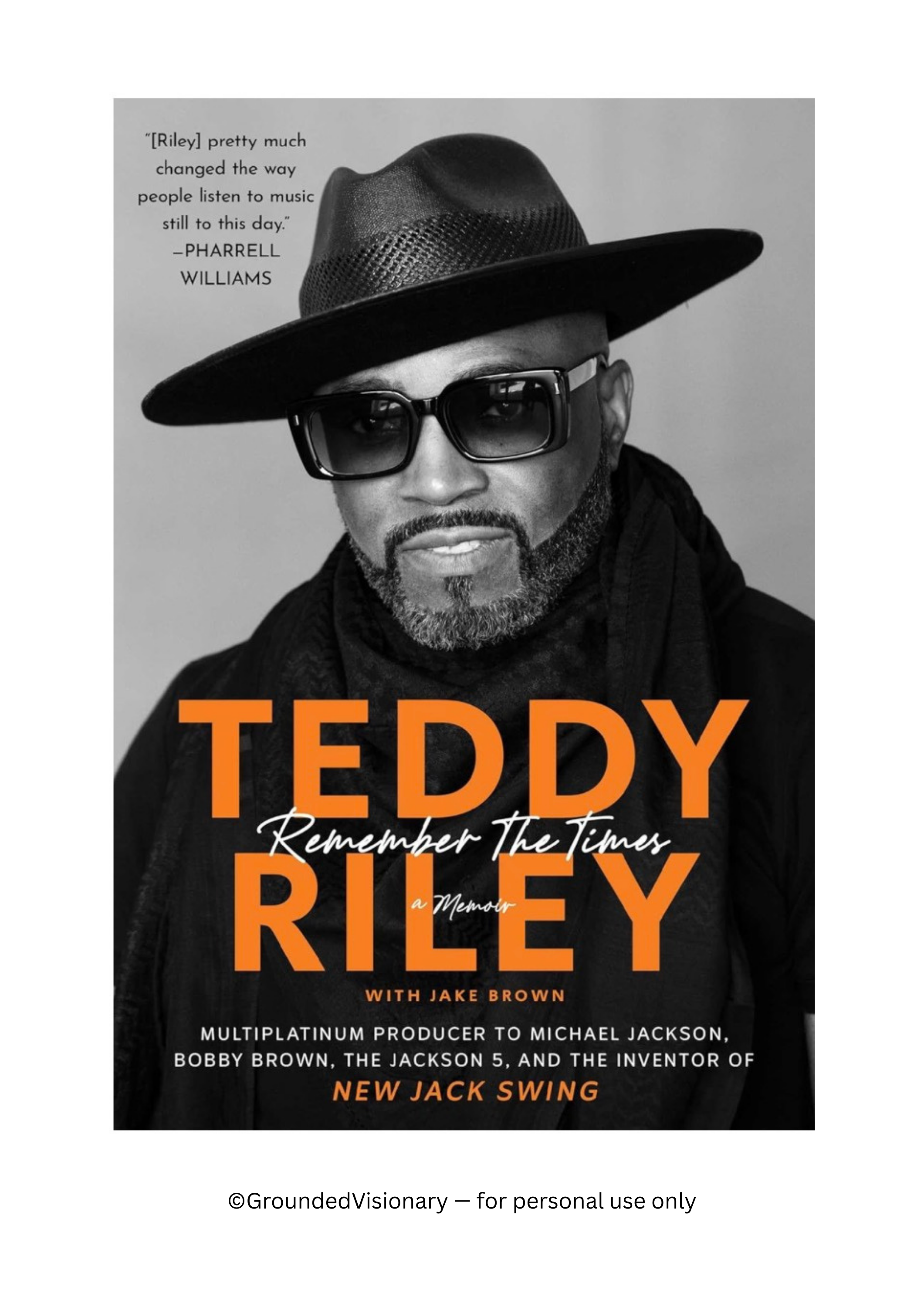
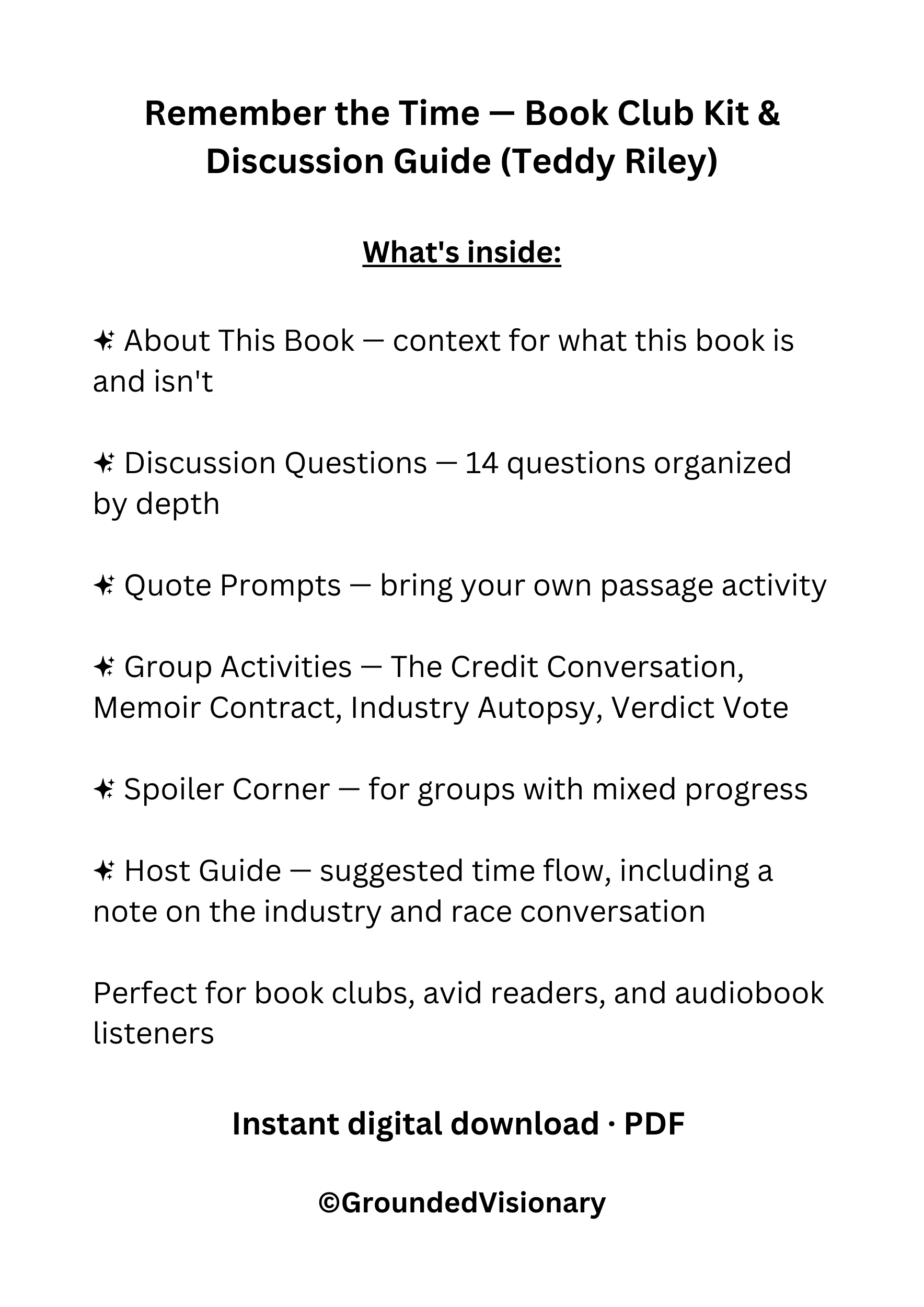
Teddy Riley didn't just make records. He made the sound of an era — New Jack Swing, Guy, Blackstreet, Michael Jackson, the Neptunes before you knew who the Neptunes were. The career is undeniable. The memoir is something more complicated. It tells you almost everything about what he built and not nearly enough about what it cost.
That gap is where the conversation is.
This kit was written for readers who finished Remember the Times with real questions — about credit and ownership, about what the music industry has always done to Black artists specifically, about what it means when a man writes a whole book about his life and still keeps the door mostly closed. The industry history lands. The personal story stays at a distance. Your book club gets to decide what that means and why.
✦ About This Book — context for what this memoir delivers and what it deliberately avoids
✦ Discussion Questions — 14 questions in three tiers, from warmup through the conversations that go somewhere
✦ Quote Prompts — 5 prompts to help every reader find their own moment to bring to the table
✦ Activities — 4 group activities including The Credit Conversation, The Memoir Contract, The Industry Autopsy, and the Verdict Vote
✦ Spoiler Corner — host-only escalation questions for groups that finished and want to go further
✦ For the Host — facilitation notes including specific guidance on the music industry and race conversation, which will go deep fast
Details: Instant digital download. PDF delivered immediately after purchase. Personal and single-group use. Fan-created. Not affiliated with Teddy Riley, Jake Brown, or the publisher.
For classrooms, libraries, and educational programs — contact the shop for institutional licensing.
Built for book clubs, R&B fans, music industry watchers, and anyone who has ever watched someone else take credit for their work.
A raw, unfiltered look at transformation, truth, and the cost of seeing the world clearly.
This guide is built for readers who are ready to go beyond the speeches, beyond the image, and sit with the contradictions, the evolution, and the cost of becoming.
This guide is for:
Readers who finished the book and still have questions
Book clubs that aren’t afraid of disagreement
Educators and discussion leaders who want depth—not filler
If your conversations usually stay on the surface… this will change that.
This isn’t just a list of questions.
It helps you:
Break down Malcolm X’s transformation without simplifying it
Navigate difficult conversations without shutting them down
Push past “what happened” into what it meant
Create discussions where people actually take positions
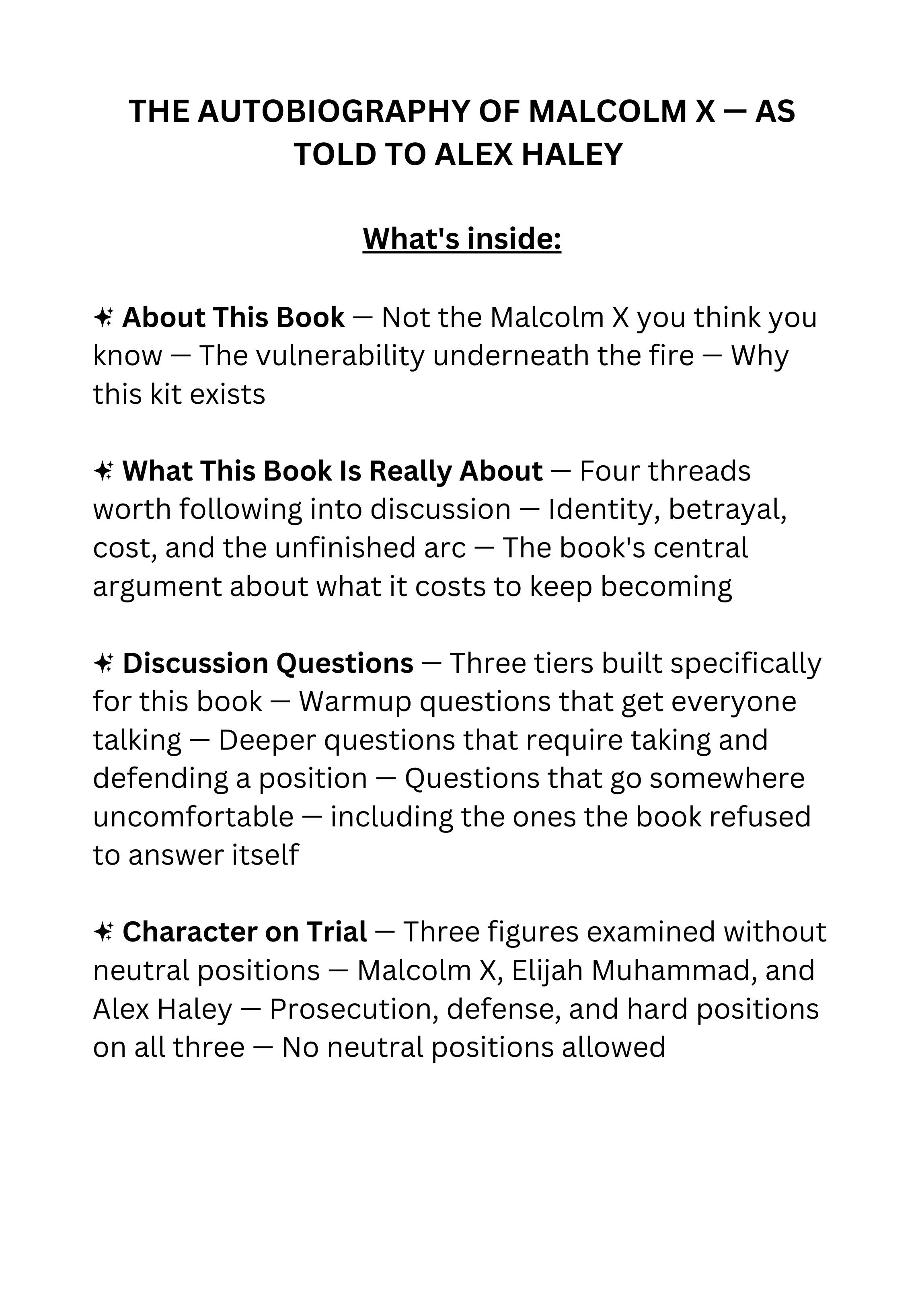
Inside the Guide:
✔ About This Book
Not the Malcolm X you think you know — the vulnerability beneath the fire — and why this guide exists
✔ What This Book Is Really About
Identity, betrayal, transformation, and the cost of becoming — four threads designed to carry real discussion
✔ Discussion Questions (3 Levels)
Warm-up (get people talking)
Position-based (people choose sides)
Uncomfortable (the questions the book leaves unresolved)
✔ Character on Trial
Malcolm X. Elijah Muhammad. Alex Haley.
No neutral positions allowed.
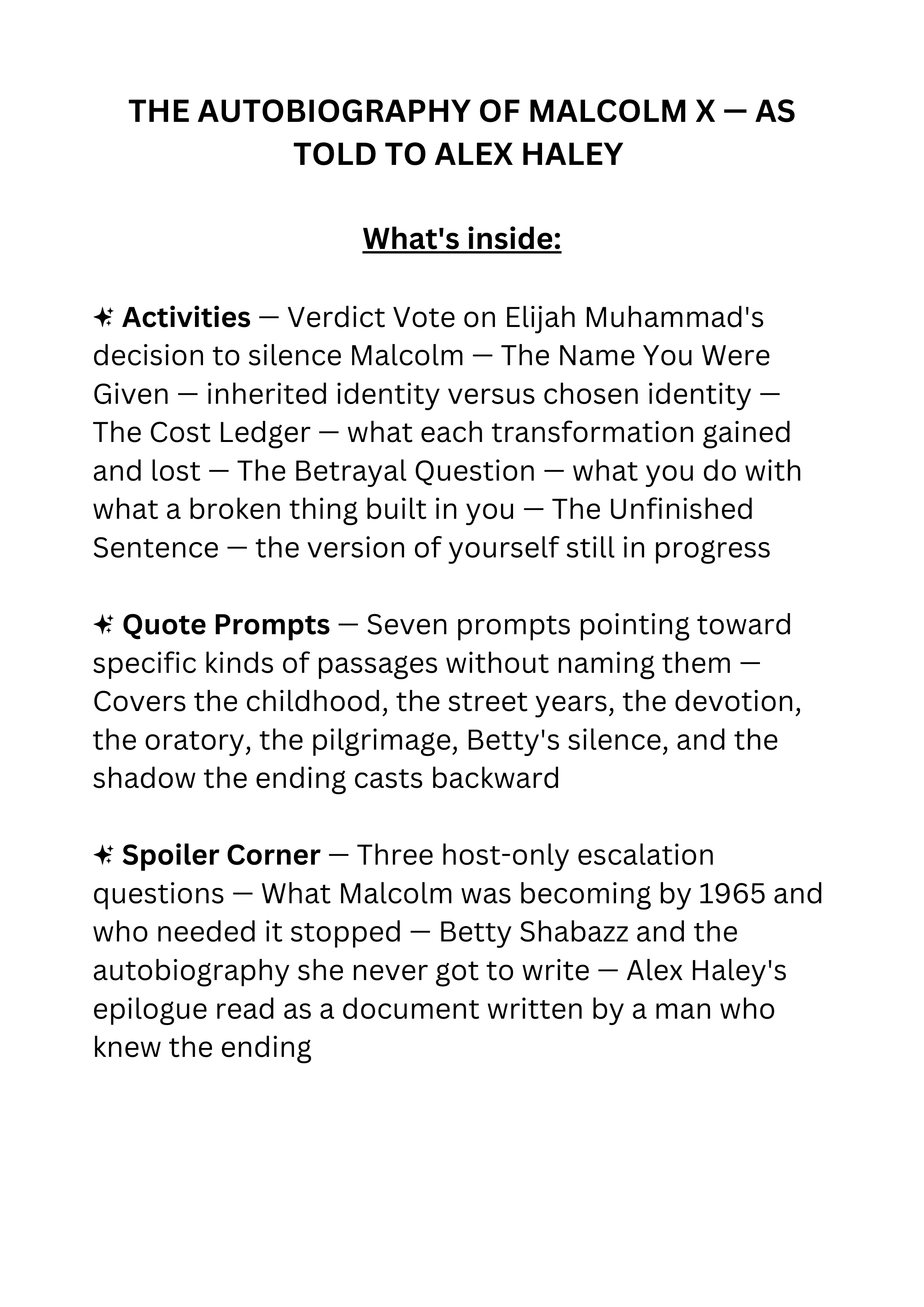
✔ Activities That Go Deeper
Identity vs inheritance, betrayal, transformation, and unfinished self
✔ Quote Prompts
Designed to pull out the most important moments—without spoon-feeding them
✔ Spoiler Section (For Hosts)
Escalation questions + deeper angles most discussions avoid
✔ Host Guide
Timing, flow, sensitive topics, and how to manage a divided room
After using this guide, your discussion won’t sound like:
“Did you like the book?”
It will sound like:
“I don’t agree with that—and here’s why.”
“I never thought about it like that before.”
“That changes how I see him completely.”
⚡ FORMAT
Instant digital download (PDF)
Designed for personal use, book clubs, or classroom discussion
No results found
No results match your search. Try removing a few filters.