 Image 1 of 5
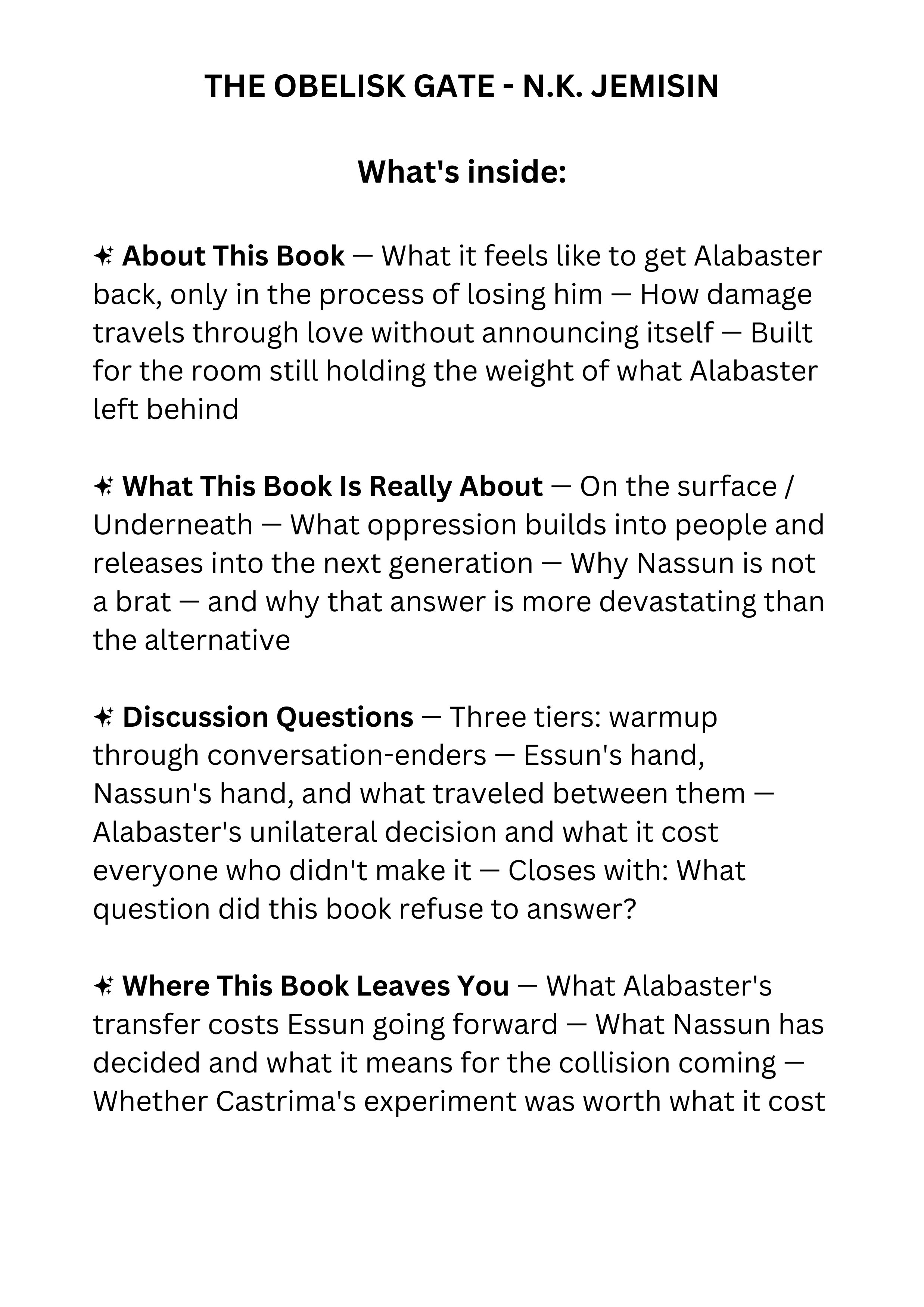 Image 2 of 5
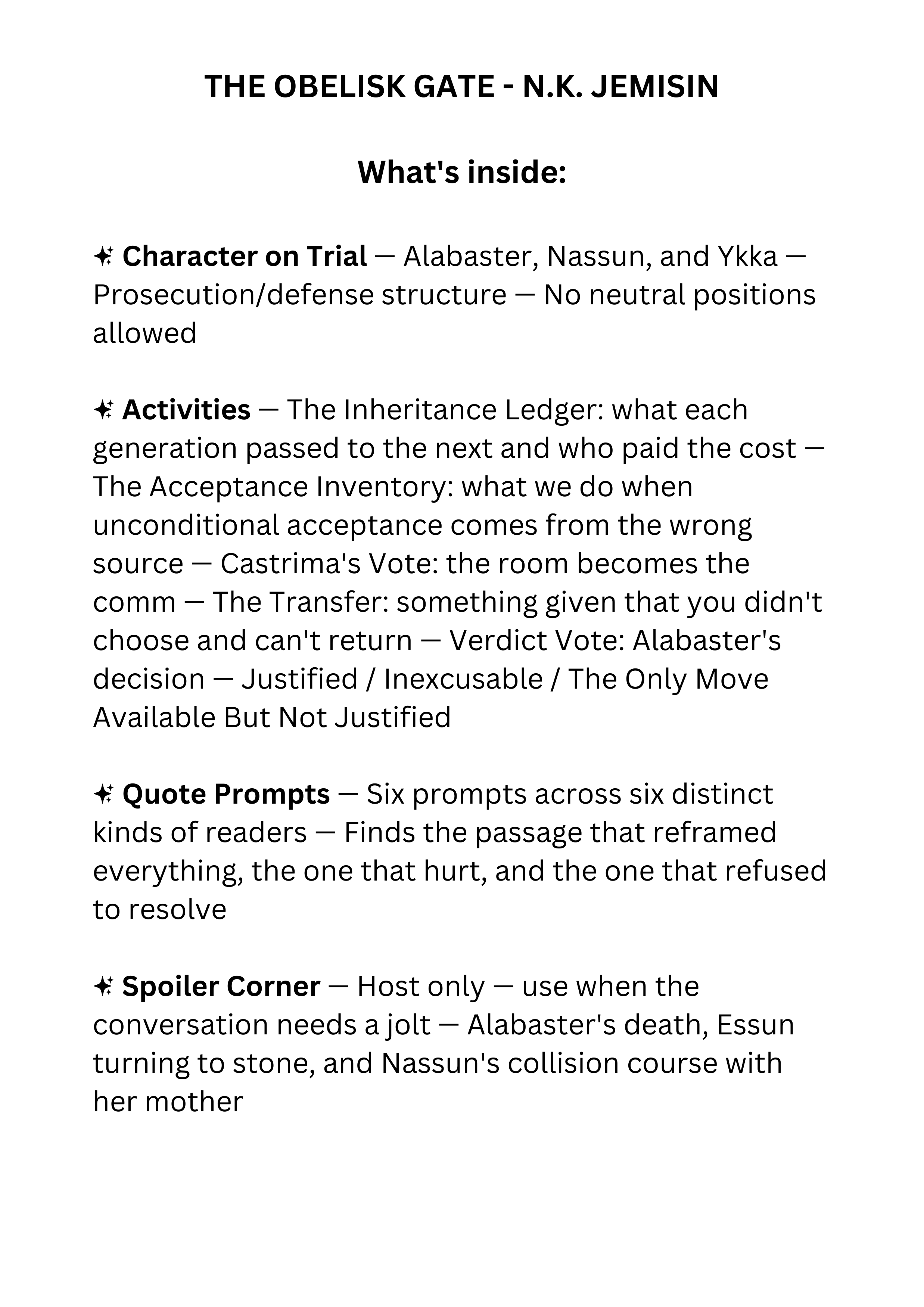 Image 3 of 5
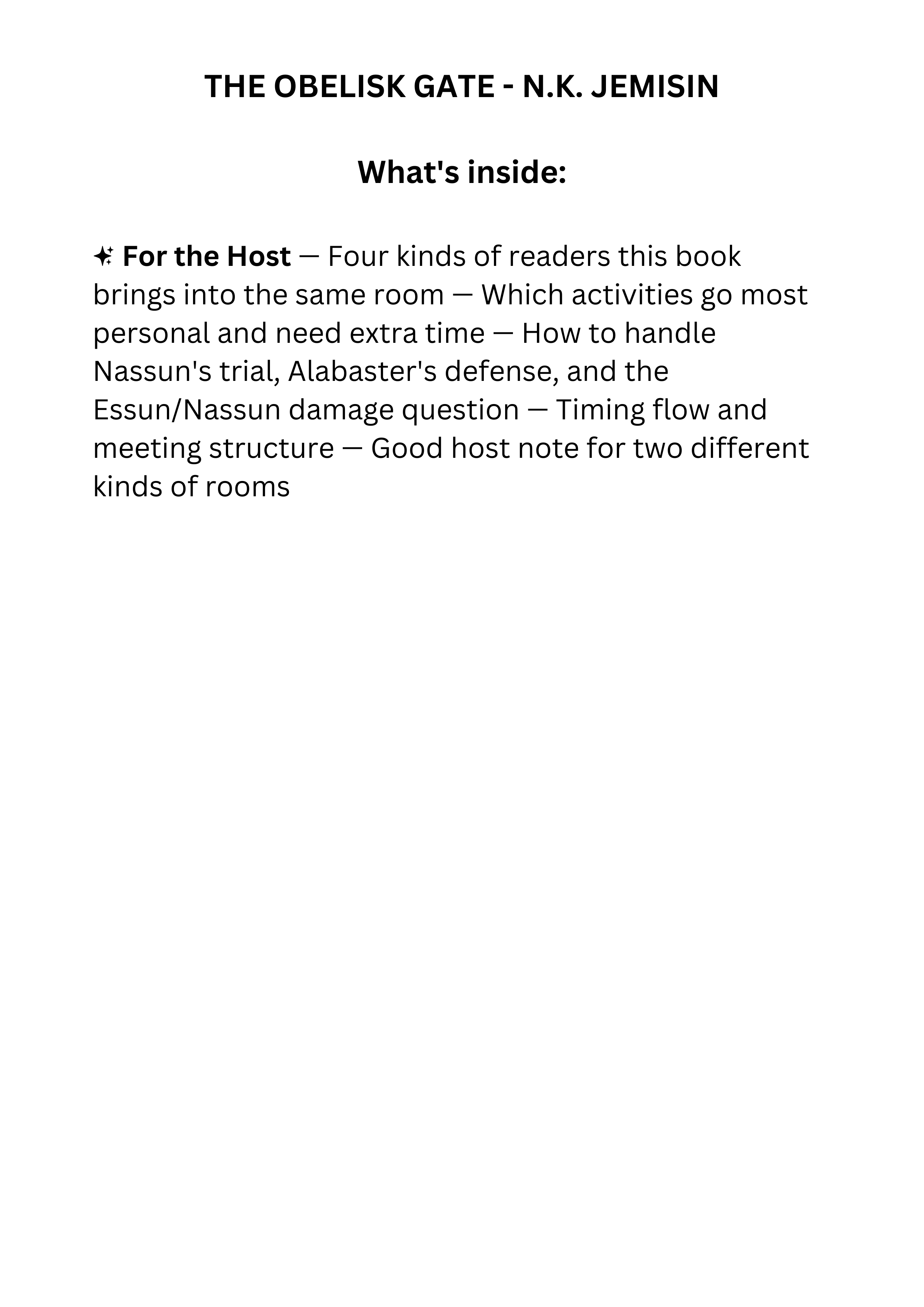 Image 4 of 5
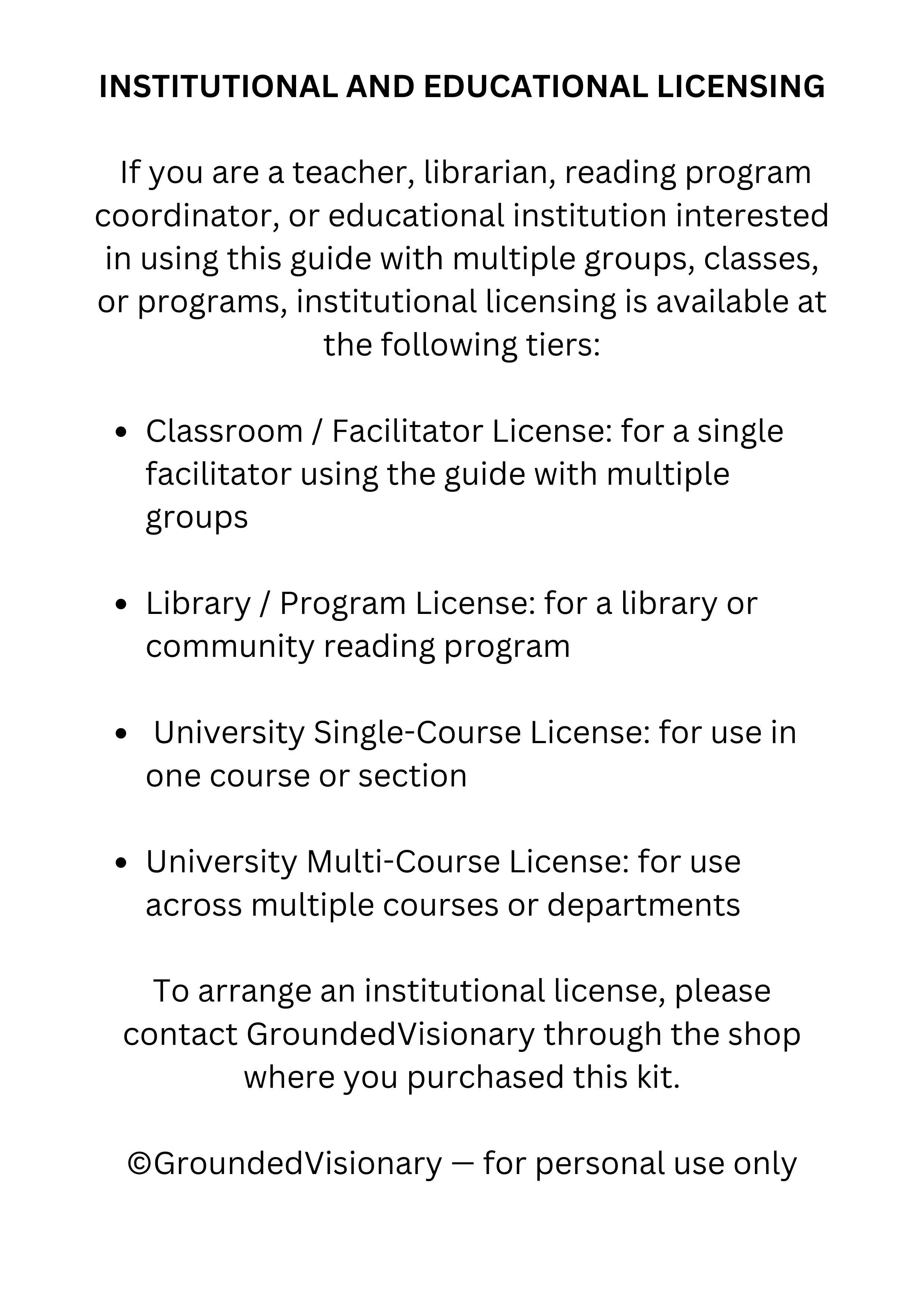 Image 5 of 5
An exploration of control, consequence, and what power really costs.
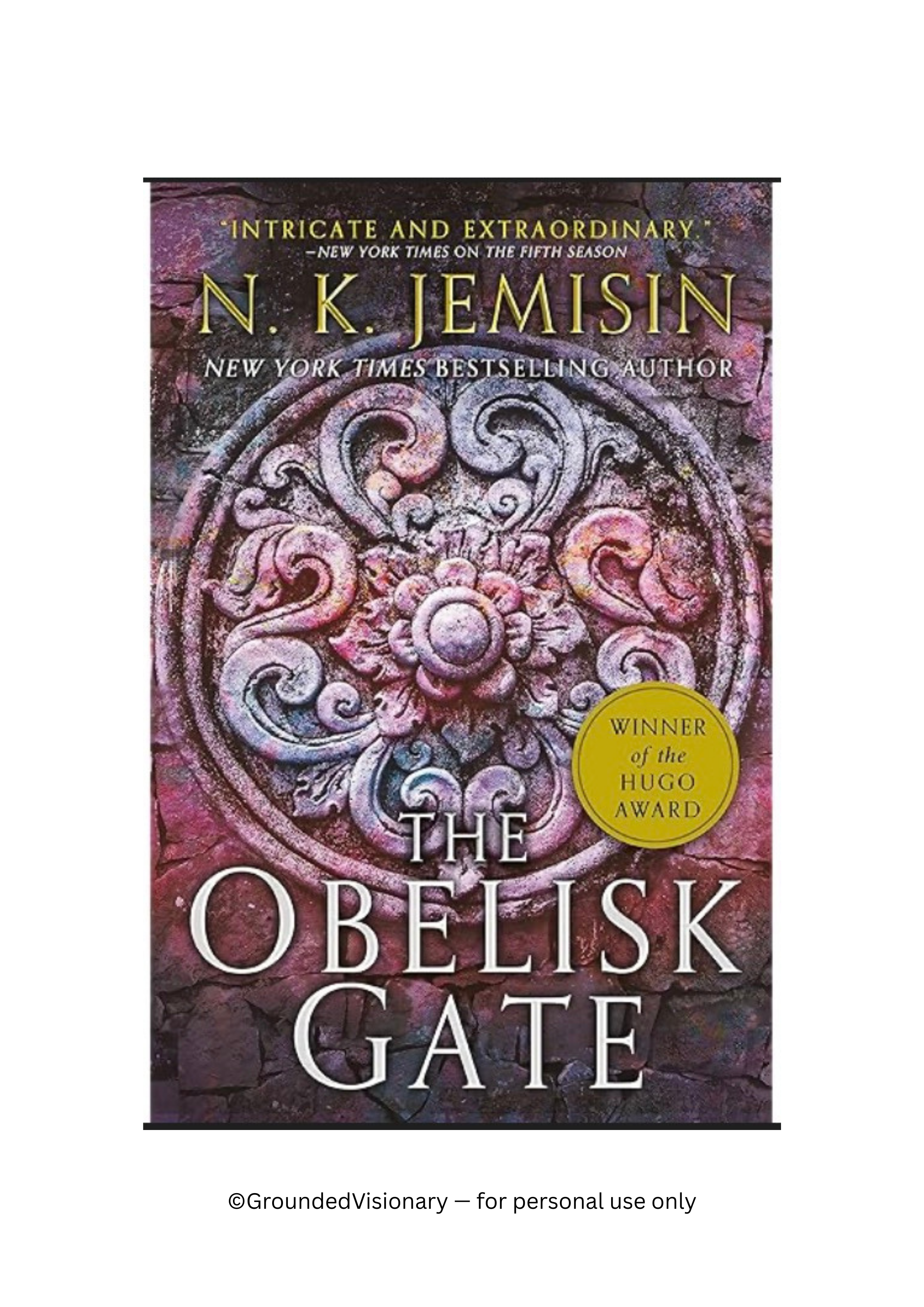
The Obelisk Gate gives you back the character you loved most from the first book and then shows him to you only in the process of being taken away. Alabaster is dying — his body turning to stone, the cost of what he did to crack the world open — and he spends every session with Essun transferring everything he knows before he finishes the process of becoming what he used to move. His death is this book's central act. It hurts in proportion to how much you cared about him in The Fifth Season. And it is not the most devastating thing Jemisin does in this novel.
The most devastating thing is Nassun. Jemisin splits the narrative between Essun and her daughter moving toward each other and away from each other simultaneously — and what Nassun's chapters reveal is that Essun, in trying to protect her daughter, used the same methods that were used on her. She broke Nassun's hand to teach her control. She trained fear into the person she most wanted to save. The damage the Fulcrum built into Essun did not stay inside Essun. It traveled. That is not a plot twist. It is an argument about what oppression does when it doesn't get named — how it moves through love, how it replicates, how a person can be simultaneously a survivor and a source of the same harm.
This kit was built for the room that finished The Obelisk Gate still feeling the weight of Alabaster's last act — and still not entirely sure what to do with Nassun.
✦ What's Inside
✦ About This Book — What it feels like to get Alabaster back only in the process of losing him — How damage travels through love without announcing itself — Built for the room still holding the weight of what Alabaster left behind
✦ What This Book Is Really About — What oppression builds into people and releases into the next generation — Why Nassun is not a brat — and why that answer is more devastating than the alternative — What Castrima's experiment reveals about coexistence and human fear
✦ Discussion Questions — Three Tiers — Tier 1: Warmup questions that get everyone talking — Tier 2: Essun's hand, Nassun's hand, and what traveled between them — Tier 3: Alabaster's unilateral decision and what it cost everyone who didn't make it — Closes with: What question did this book refuse to answer?
✦ Where This Book Leaves You — What Alabaster's transfer costs Essun going forward — What Nassun has decided and what it means for the collision coming — Whether Castrima's experiment was worth what it cost
✦ Character on Trial — Alabaster, Nassun, and Ykka — Prosecution/defense structure — Hard position questions with mandatory reversal — No neutral positions allowed
✦ Activities — The Inheritance Ledger: what each generation passed to the next and who paid the cost — The Acceptance Inventory: what we do when unconditional acceptance comes from the wrong source — Castrima's Vote: the room becomes the comm — The Transfer: something given that you didn't choose and can't return — Verdict Vote: Alabaster's decision — Justified / Inexcusable / The Only Move Available But Not Justified
✦ Quote Prompts — Six prompts across six distinct kinds of readers — The passage that reframed everything — The one that hurt — The one that refused to resolve
✦ Spoiler Corner — Host only — use when the conversation needs a jolt — Alabaster's death, Essun turning to stone, and Nassun's collision course with her mother
✦ For the Host — Four kinds of readers this book brings into the same room — How to handle Nassun's trial, Alabaster's defense, and the Essun/Nassun damage question — Timing flow and meeting structure — Good host note for two different kinds of rooms
Details — Instant download PDF — Book 2 of the Broken Earth trilogy — pairs with The Fifth Season discussion guide — Personal and single-group use. No redistribution or resale. — Fan-created guide. Not affiliated with or endorsed by N.K. Jemisin or any publisher.
Licensing for classrooms, libraries, and educational programs is available. If you plan to use this guide for a class, reading program, or institutional setting, please contact the shop owner to arrange an appropriate license.
An exploration of control, consequence, and what power really costs.
The Obelisk Gate gives you back the character you loved most from the first book and then shows him to you only in the process of being taken away. Alabaster is dying — his body turning to stone, the cost of what he did to crack the world open — and he spends every session with Essun transferring everything he knows before he finishes the process of becoming what he used to move. His death is this book's central act. It hurts in proportion to how much you cared about him in The Fifth Season. And it is not the most devastating thing Jemisin does in this novel.
The most devastating thing is Nassun. Jemisin splits the narrative between Essun and her daughter moving toward each other and away from each other simultaneously — and what Nassun's chapters reveal is that Essun, in trying to protect her daughter, used the same methods that were used on her. She broke Nassun's hand to teach her control. She trained fear into the person she most wanted to save. The damage the Fulcrum built into Essun did not stay inside Essun. It traveled. That is not a plot twist. It is an argument about what oppression does when it doesn't get named — how it moves through love, how it replicates, how a person can be simultaneously a survivor and a source of the same harm.
This kit was built for the room that finished The Obelisk Gate still feeling the weight of Alabaster's last act — and still not entirely sure what to do with Nassun.
✦ What's Inside
✦ About This Book — What it feels like to get Alabaster back only in the process of losing him — How damage travels through love without announcing itself — Built for the room still holding the weight of what Alabaster left behind
✦ What This Book Is Really About — What oppression builds into people and releases into the next generation — Why Nassun is not a brat — and why that answer is more devastating than the alternative — What Castrima's experiment reveals about coexistence and human fear
✦ Discussion Questions — Three Tiers — Tier 1: Warmup questions that get everyone talking — Tier 2: Essun's hand, Nassun's hand, and what traveled between them — Tier 3: Alabaster's unilateral decision and what it cost everyone who didn't make it — Closes with: What question did this book refuse to answer?
✦ Where This Book Leaves You — What Alabaster's transfer costs Essun going forward — What Nassun has decided and what it means for the collision coming — Whether Castrima's experiment was worth what it cost
✦ Character on Trial — Alabaster, Nassun, and Ykka — Prosecution/defense structure — Hard position questions with mandatory reversal — No neutral positions allowed
✦ Activities — The Inheritance Ledger: what each generation passed to the next and who paid the cost — The Acceptance Inventory: what we do when unconditional acceptance comes from the wrong source — Castrima's Vote: the room becomes the comm — The Transfer: something given that you didn't choose and can't return — Verdict Vote: Alabaster's decision — Justified / Inexcusable / The Only Move Available But Not Justified
✦ Quote Prompts — Six prompts across six distinct kinds of readers — The passage that reframed everything — The one that hurt — The one that refused to resolve
✦ Spoiler Corner — Host only — use when the conversation needs a jolt — Alabaster's death, Essun turning to stone, and Nassun's collision course with her mother
✦ For the Host — Four kinds of readers this book brings into the same room — How to handle Nassun's trial, Alabaster's defense, and the Essun/Nassun damage question — Timing flow and meeting structure — Good host note for two different kinds of rooms
Details — Instant download PDF — Book 2 of the Broken Earth trilogy — pairs with The Fifth Season discussion guide — Personal and single-group use. No redistribution or resale. — Fan-created guide. Not affiliated with or endorsed by N.K. Jemisin or any publisher.
Licensing for classrooms, libraries, and educational programs is available. If you plan to use this guide for a class, reading program, or institutional setting, please contact the shop owner to arrange an appropriate license.