 Image 1 of 4
 Image 2 of 4
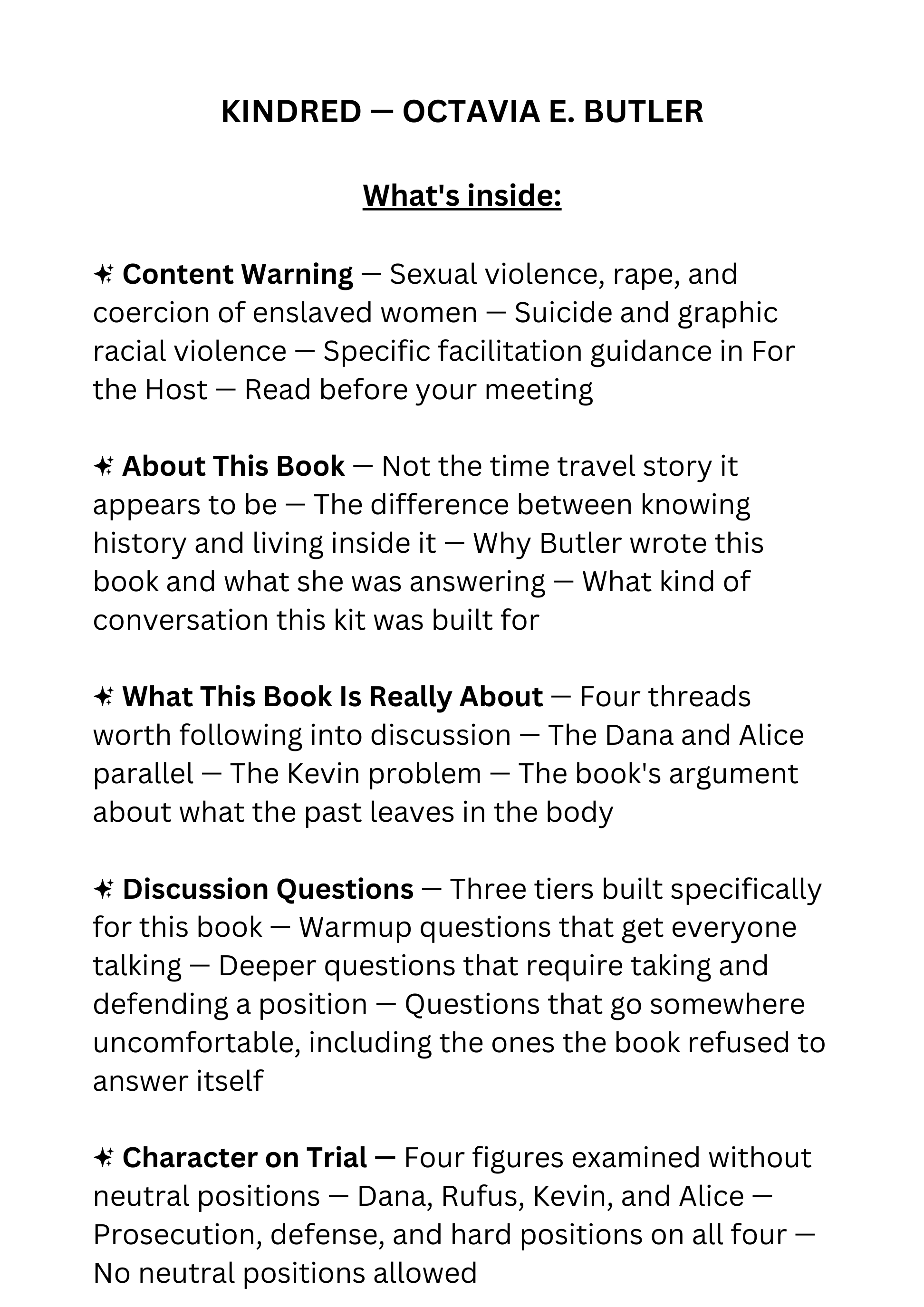 Image 3 of 4
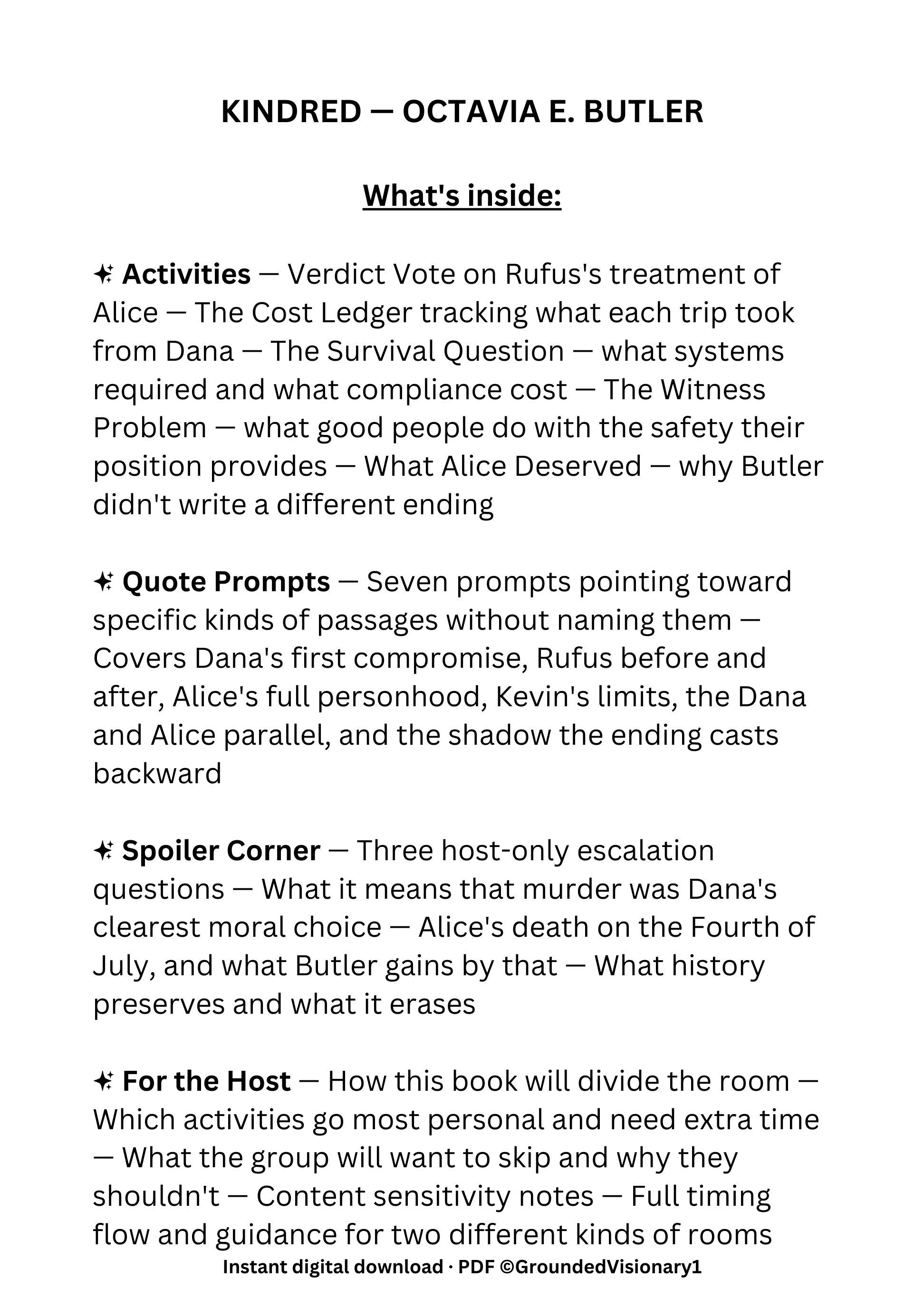 Image 4 of 4
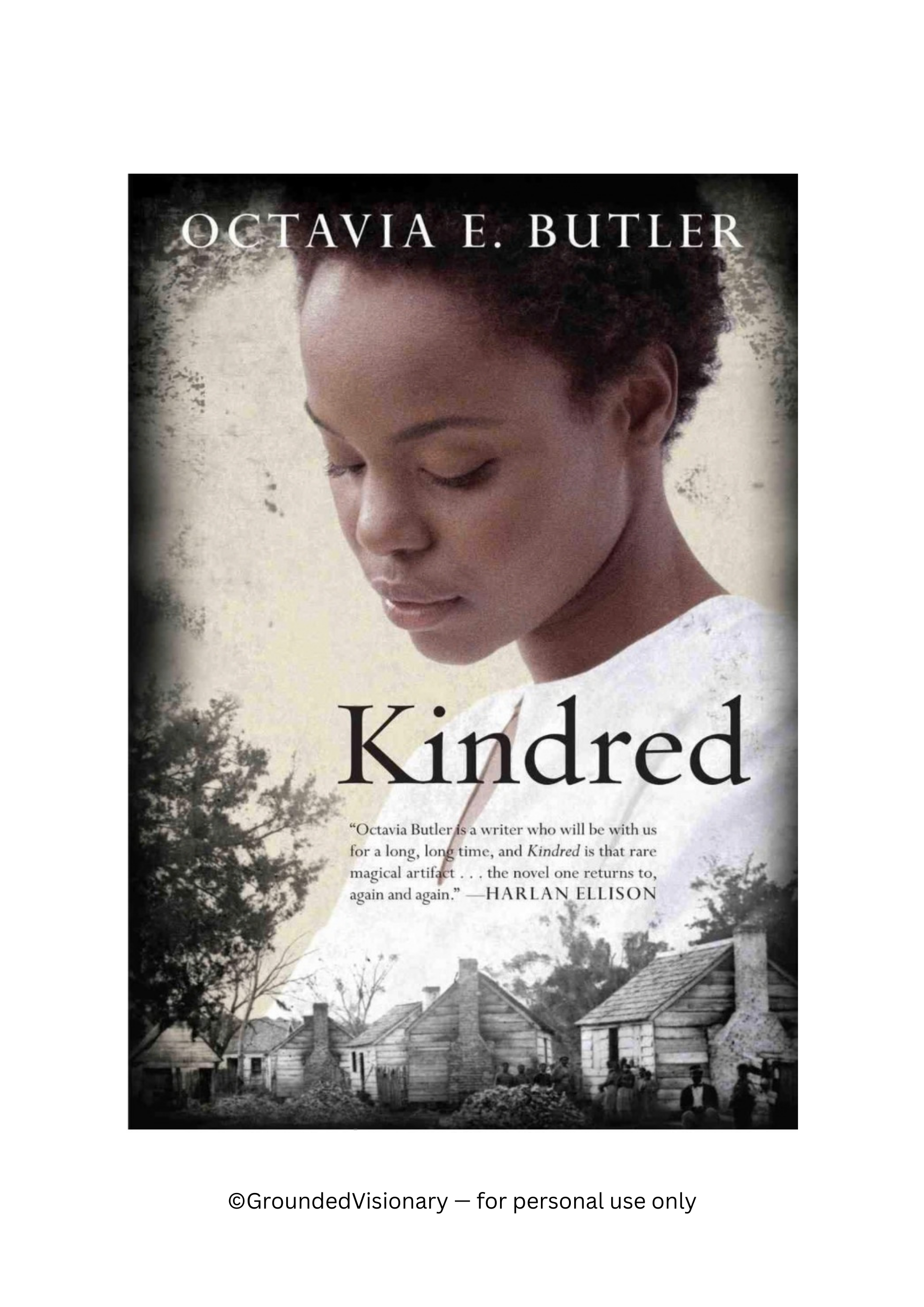
A brutal, time-bending look at slavery, survival, and how the past refuses to stay buried.
Octavia Butler wrote Kindred because young Black Americans in the 1960s and 70s kept saying they never would have tolerated what their enslaved ancestors endured. Dana Franklin is her answer to that argument — and it is not a gentle one.
This is not a time travel story. The time travel is real but it is never explained and never the point. What pulls Dana back, again and again, to a Maryland plantation before the Civil War is something older and more inescapable than physics: she is tethered to a white slaveholder's son because he is her ancestor, and he must survive in order for her to exist. Across six trips she keeps him alive, negotiates with his world, and makes choices she could not have imagined making before she arrived. By the end she has lost an arm and the novel has made its argument: the past does not stay in the past. It comes home with you.
This kit was built for a room willing to sit with what Butler is actually asking. Not whether slavery was evil — it was — but what it does to the people inside it, all of them, and what it means that its damage didn't end when the institution did. The discussion goes to Dana's survival compromises, to Rufus's humanity and his monstrosity, to Alice's uncompromising resistance and what it costs her, to Kevin's good intentions and their limits. It goes personal. It goes uncomfortable. It goes exactly where the book demands.
This kit was built for a room that can hold the full weight of what Butler wrote — the survival, the compromise, the damage that comes home in the body, and the question of what we owe the people history didn't give a way out.
Note: This guide contains material addressing sexual violence, rape, coercion, and racial trauma consistent with the novel's content. A content warning page is included at the front of the guide with specific facilitation guidance for hosts.
✦ What's Inside
✦ Content Warning — Sexual violence, rape, coercion, racial trauma — Facilitation guidance included for hosts — Placed at the front — this book earns it
✦ About This Book — Not the time travel story it appears to be — The difference between knowing history and living inside it — What kind of conversation this kit was built for
✦ What This Book Is Really About — Four threads worth following into discussion — The Dana and Alice parallel — The Kevin problem — The book's argument about what the past leaves in the body
✦ Discussion Questions — Three Tiers — Three tiers built specifically for this book — Tier 1: Warmup questions that get everyone talking — Tier 2: Deeper questions requiring a position and a defense — Tier 3: Questions that go somewhere uncomfortable — Closes with: What question did this book refuse to answer?
✦ Character on Trial — Dana, Rufus, Kevin, and Alice — Prosecution/defense structure — Hard position questions with mandatory reversal — No neutral positions allowed
✦ Activities — Verdict Vote: Rufus's treatment of Alice — The Cost Ledger: what each trip took from Dana — The Survival Question — The Witness Problem — What Alice Deserved
✦ Quote Prompts — Seven prompts pointing toward specific kinds of passages — The moment Dana made a choice you understood and couldn't have made — The passage where the past stopped being history and became present
✦ Spoiler Corner — Host only — three escalation questions for when the conversation needs a jolt
✦ For the Host — How this book will divide the room — Content sensitivity notes and facilitation guidance — Full timing flow for two different kinds of rooms
✦ Bonus Host Guide — A free facilitation toolkit included with every purchase
Details — Instant download PDF — 45+ pages, print-ready — Personal and single-group use. No redistribution or resale. — Fan-created guide. Not affiliated with or endorsed by Octavia Butler's estate or any publisher.
Licensing for classrooms, libraries, and educational programs is available. If you plan to use this guide for a class, reading program, or institutional setting, please contact the shop owner to arrange an appropriate license.
A brutal, time-bending look at slavery, survival, and how the past refuses to stay buried.
Octavia Butler wrote Kindred because young Black Americans in the 1960s and 70s kept saying they never would have tolerated what their enslaved ancestors endured. Dana Franklin is her answer to that argument — and it is not a gentle one.
This is not a time travel story. The time travel is real but it is never explained and never the point. What pulls Dana back, again and again, to a Maryland plantation before the Civil War is something older and more inescapable than physics: she is tethered to a white slaveholder's son because he is her ancestor, and he must survive in order for her to exist. Across six trips she keeps him alive, negotiates with his world, and makes choices she could not have imagined making before she arrived. By the end she has lost an arm and the novel has made its argument: the past does not stay in the past. It comes home with you.
This kit was built for a room willing to sit with what Butler is actually asking. Not whether slavery was evil — it was — but what it does to the people inside it, all of them, and what it means that its damage didn't end when the institution did. The discussion goes to Dana's survival compromises, to Rufus's humanity and his monstrosity, to Alice's uncompromising resistance and what it costs her, to Kevin's good intentions and their limits. It goes personal. It goes uncomfortable. It goes exactly where the book demands.
This kit was built for a room that can hold the full weight of what Butler wrote — the survival, the compromise, the damage that comes home in the body, and the question of what we owe the people history didn't give a way out.
Note: This guide contains material addressing sexual violence, rape, coercion, and racial trauma consistent with the novel's content. A content warning page is included at the front of the guide with specific facilitation guidance for hosts.
✦ What's Inside
✦ Content Warning — Sexual violence, rape, coercion, racial trauma — Facilitation guidance included for hosts — Placed at the front — this book earns it
✦ About This Book — Not the time travel story it appears to be — The difference between knowing history and living inside it — What kind of conversation this kit was built for
✦ What This Book Is Really About — Four threads worth following into discussion — The Dana and Alice parallel — The Kevin problem — The book's argument about what the past leaves in the body
✦ Discussion Questions — Three Tiers — Three tiers built specifically for this book — Tier 1: Warmup questions that get everyone talking — Tier 2: Deeper questions requiring a position and a defense — Tier 3: Questions that go somewhere uncomfortable — Closes with: What question did this book refuse to answer?
✦ Character on Trial — Dana, Rufus, Kevin, and Alice — Prosecution/defense structure — Hard position questions with mandatory reversal — No neutral positions allowed
✦ Activities — Verdict Vote: Rufus's treatment of Alice — The Cost Ledger: what each trip took from Dana — The Survival Question — The Witness Problem — What Alice Deserved
✦ Quote Prompts — Seven prompts pointing toward specific kinds of passages — The moment Dana made a choice you understood and couldn't have made — The passage where the past stopped being history and became present
✦ Spoiler Corner — Host only — three escalation questions for when the conversation needs a jolt
✦ For the Host — How this book will divide the room — Content sensitivity notes and facilitation guidance — Full timing flow for two different kinds of rooms
✦ Bonus Host Guide — A free facilitation toolkit included with every purchase
Details — Instant download PDF — 45+ pages, print-ready — Personal and single-group use. No redistribution or resale. — Fan-created guide. Not affiliated with or endorsed by Octavia Butler's estate or any publisher.
Licensing for classrooms, libraries, and educational programs is available. If you plan to use this guide for a class, reading program, or institutional setting, please contact the shop owner to arrange an appropriate license.