 Image 1 of 3
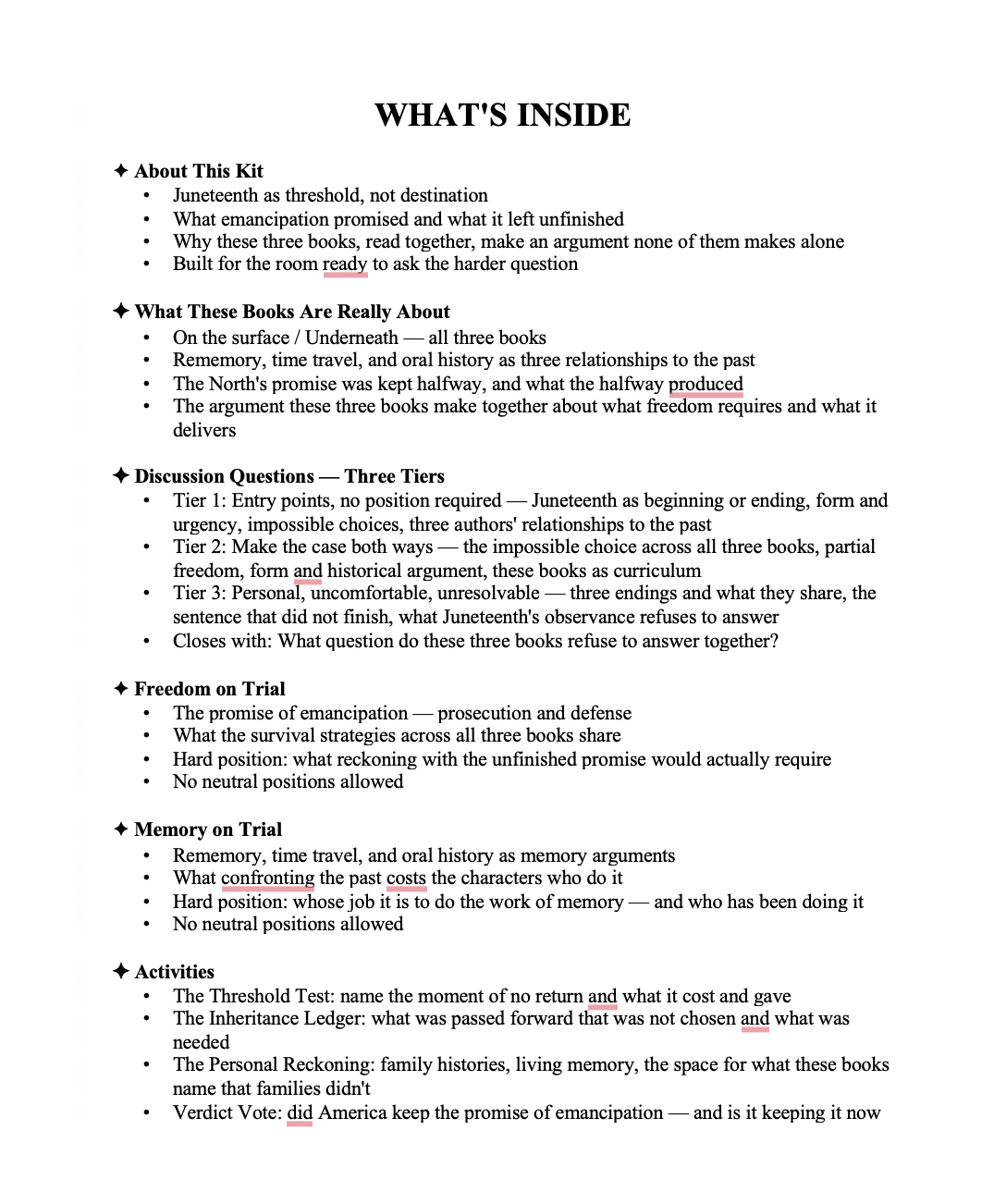 Image 2 of 3
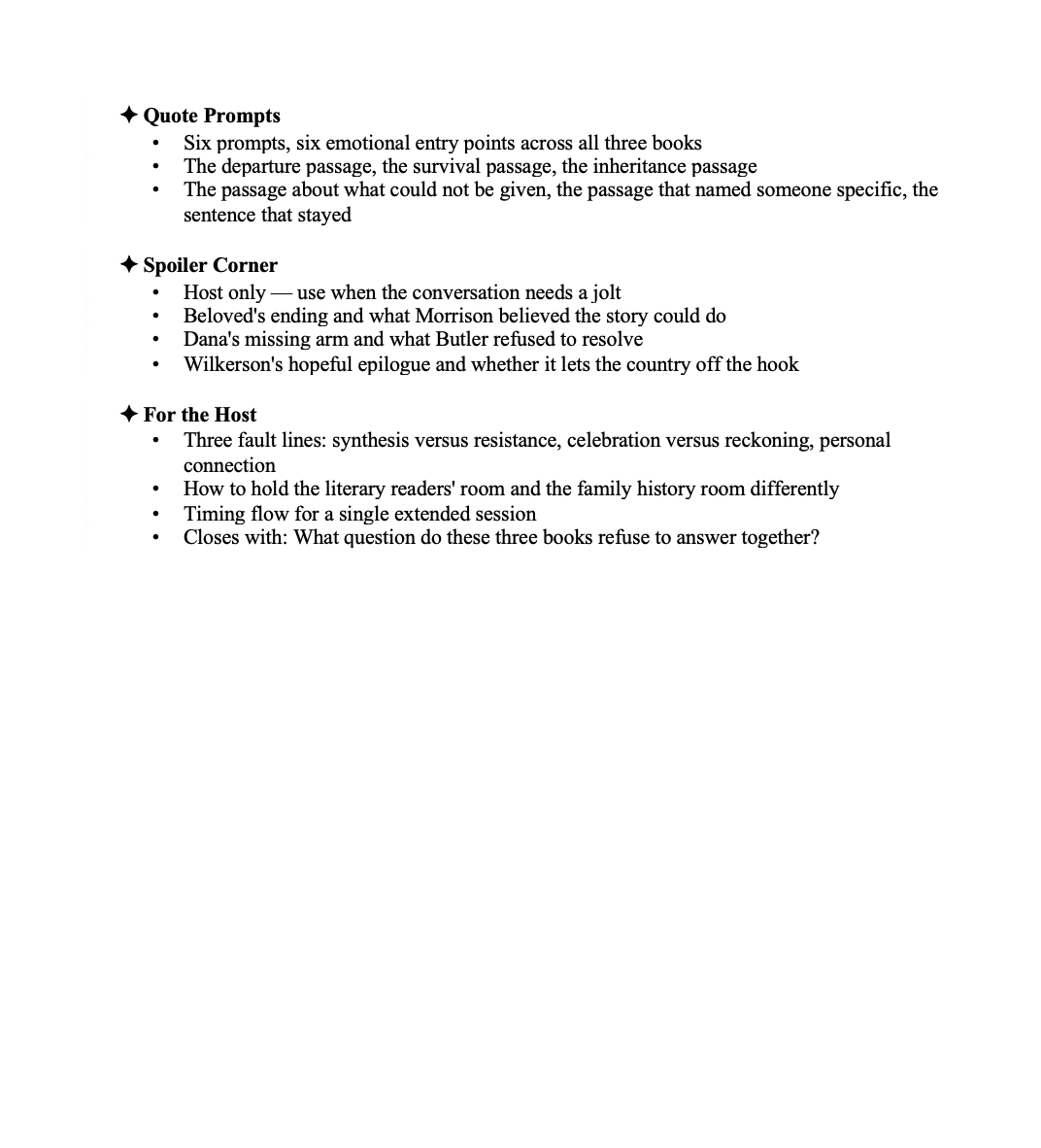 Image 3 of 3
Juneteenth marks a legal announcement. On June 19, 1865, enslaved people in Texas learned — two and a half years after the Emancipation Proclamation — that they were legally free. The country treats that announcement as a finish line. These three books treat it as a starting gun.
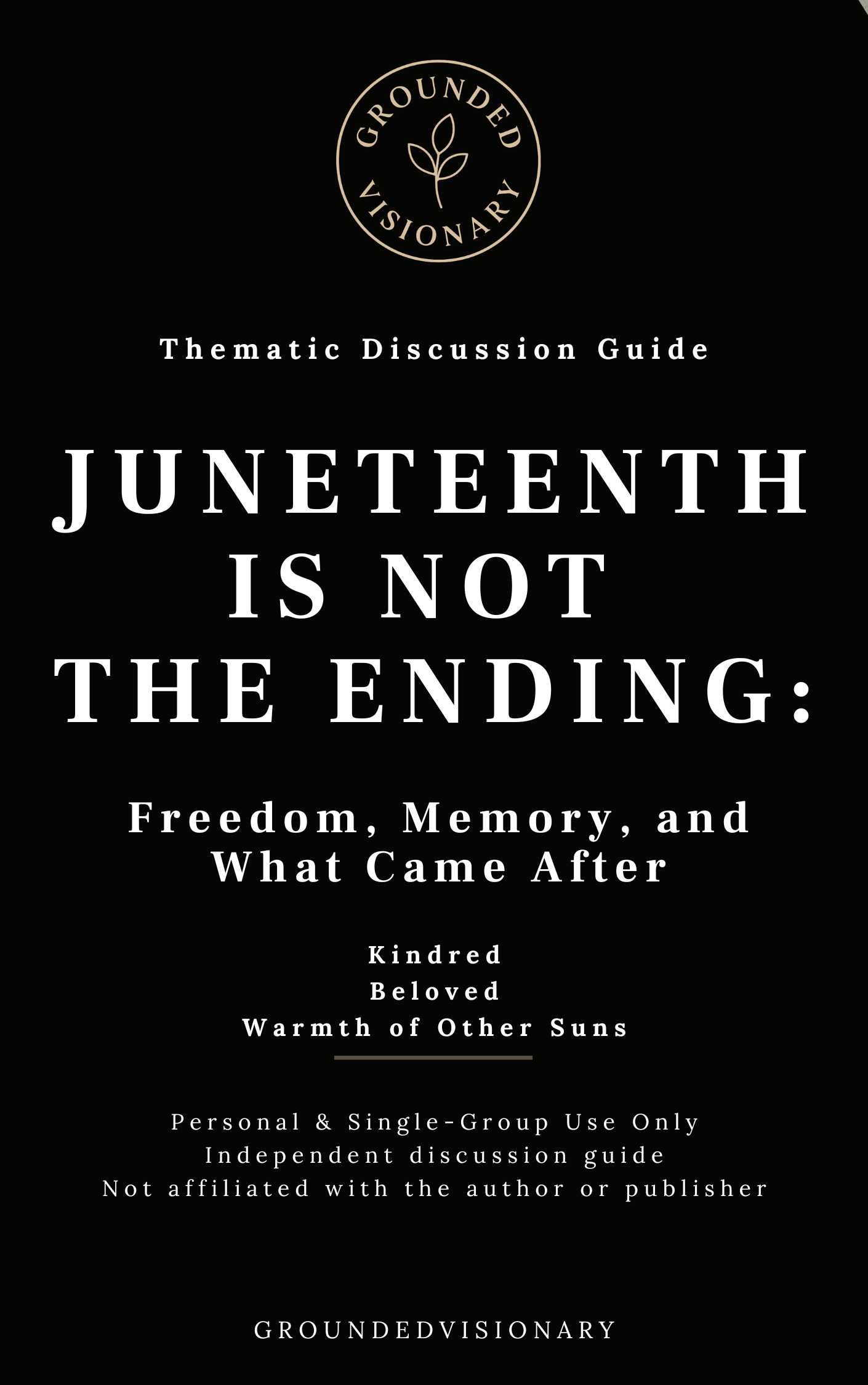
This thematic discussion kit pairs Octavia Butler's Kindred, Toni Morrison's Beloved, and Isabel Wilkerson's The Warmth of Other Suns around a single argument none of them makes alone: that legal freedom is a threshold, not a destination. That the harm, the memory, and the economic architecture of exploitation did not stop when the law said stop. That the people who lived on the other side of that legal threshold had to reckon with something the law could not touch. This kit was built for the room that wants to ask the harder question — not whether emancipation mattered, but what it left unfinished, and what that unfinished thing has cost the generations who inherited it.
✦ What's Inside
Discussion questions across three tiers — from entry points about Juneteenth as beginning or ending, into prosecution/defense questions on impossible choices, partial freedom, and whether these books should be read as a unified argument — closing with the question all three books refuse to answer together.
Freedom on Trial: the promise of emancipation, what the survival strategies across all three books share, and what reckoning with that unfinished promise would actually require. Memory on Trial: rememory, time travel, and oral history as three versions of the same argument about what the past does to the present — and whose job it is to do the work of memory.
Four activities: The Threshold Test (the moment of no return, and what it cost and gave); The Inheritance Ledger (what was passed forward that was not chosen); The Personal Reckoning (family histories, living memory, and the space for what these books name that families didn't); and a Verdict Vote with two ballots — whether America kept the promise of emancipation, and whether it is keeping it now.
Six Quote Prompts, a Spoiler Corner with host-only escalation questions on Morrison's triple repetition, Dana's missing arm, and whether Wilkerson's hopeful ending lets the country off the hook. Full facilitation notes, timing flow for an extended session, and a host note for literary readers versus rooms where the Great Migration is family history.
Instant download PDF. Fan-created guide, not affiliated with the authors or publishers. Personal and single-group use.
This is the guide for the room that can hold celebration and reckoning in the same discussion— and is ready to ask what the holiday refuses to answer.
Juneteenth marks a legal announcement. On June 19, 1865, enslaved people in Texas learned — two and a half years after the Emancipation Proclamation — that they were legally free. The country treats that announcement as a finish line. These three books treat it as a starting gun.
This thematic discussion kit pairs Octavia Butler's Kindred, Toni Morrison's Beloved, and Isabel Wilkerson's The Warmth of Other Suns around a single argument none of them makes alone: that legal freedom is a threshold, not a destination. That the harm, the memory, and the economic architecture of exploitation did not stop when the law said stop. That the people who lived on the other side of that legal threshold had to reckon with something the law could not touch. This kit was built for the room that wants to ask the harder question — not whether emancipation mattered, but what it left unfinished, and what that unfinished thing has cost the generations who inherited it.
✦ What's Inside
Discussion questions across three tiers — from entry points about Juneteenth as beginning or ending, into prosecution/defense questions on impossible choices, partial freedom, and whether these books should be read as a unified argument — closing with the question all three books refuse to answer together.
Freedom on Trial: the promise of emancipation, what the survival strategies across all three books share, and what reckoning with that unfinished promise would actually require. Memory on Trial: rememory, time travel, and oral history as three versions of the same argument about what the past does to the present — and whose job it is to do the work of memory.
Four activities: The Threshold Test (the moment of no return, and what it cost and gave); The Inheritance Ledger (what was passed forward that was not chosen); The Personal Reckoning (family histories, living memory, and the space for what these books name that families didn't); and a Verdict Vote with two ballots — whether America kept the promise of emancipation, and whether it is keeping it now.
Six Quote Prompts, a Spoiler Corner with host-only escalation questions on Morrison's triple repetition, Dana's missing arm, and whether Wilkerson's hopeful ending lets the country off the hook. Full facilitation notes, timing flow for an extended session, and a host note for literary readers versus rooms where the Great Migration is family history.
Instant download PDF. Fan-created guide, not affiliated with the authors or publishers. Personal and single-group use.
This is the guide for the room that can hold celebration and reckoning in the same discussion— and is ready to ask what the holiday refuses to answer.