 Image 1 of 4
 Image 2 of 4
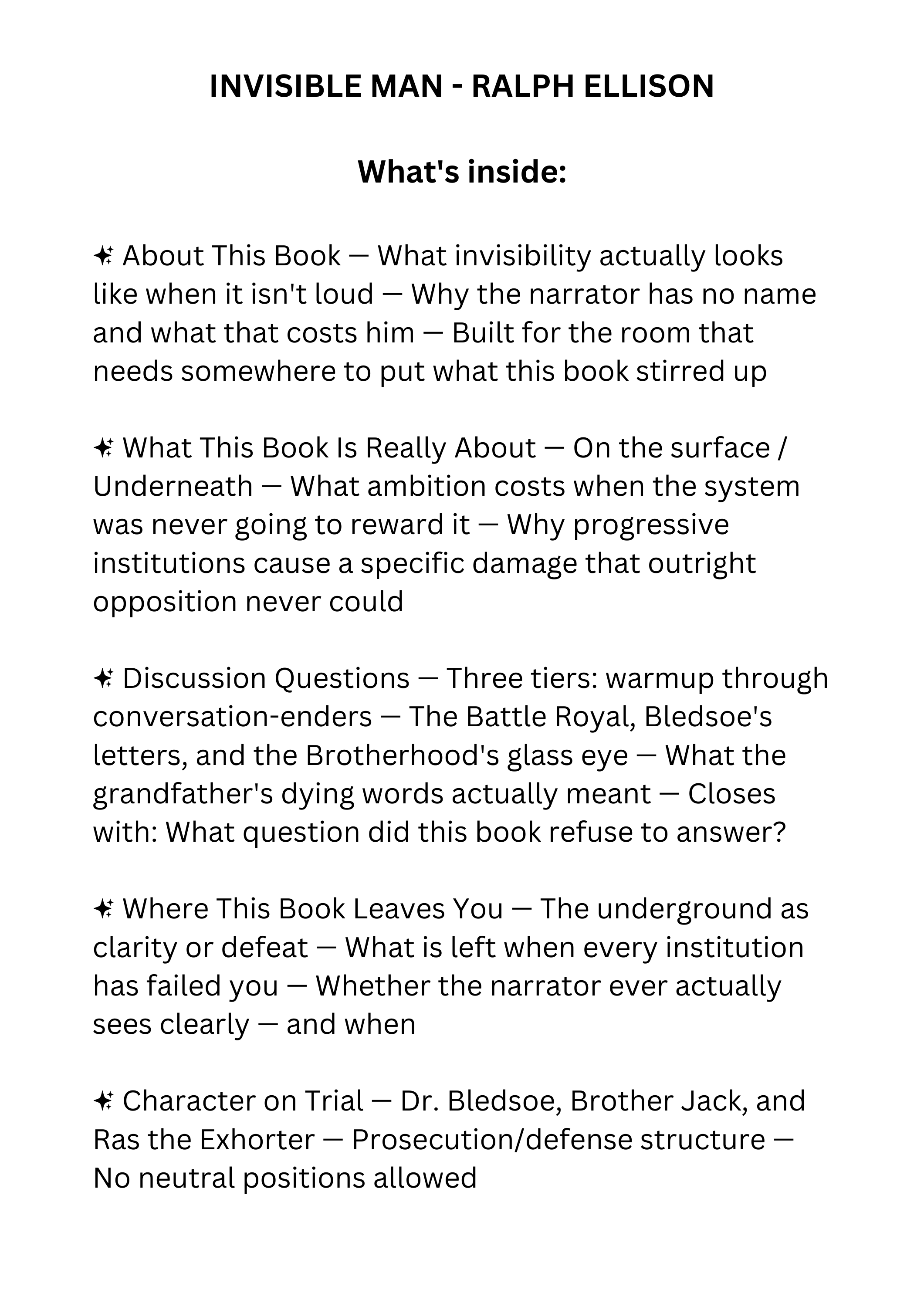 Image 3 of 4
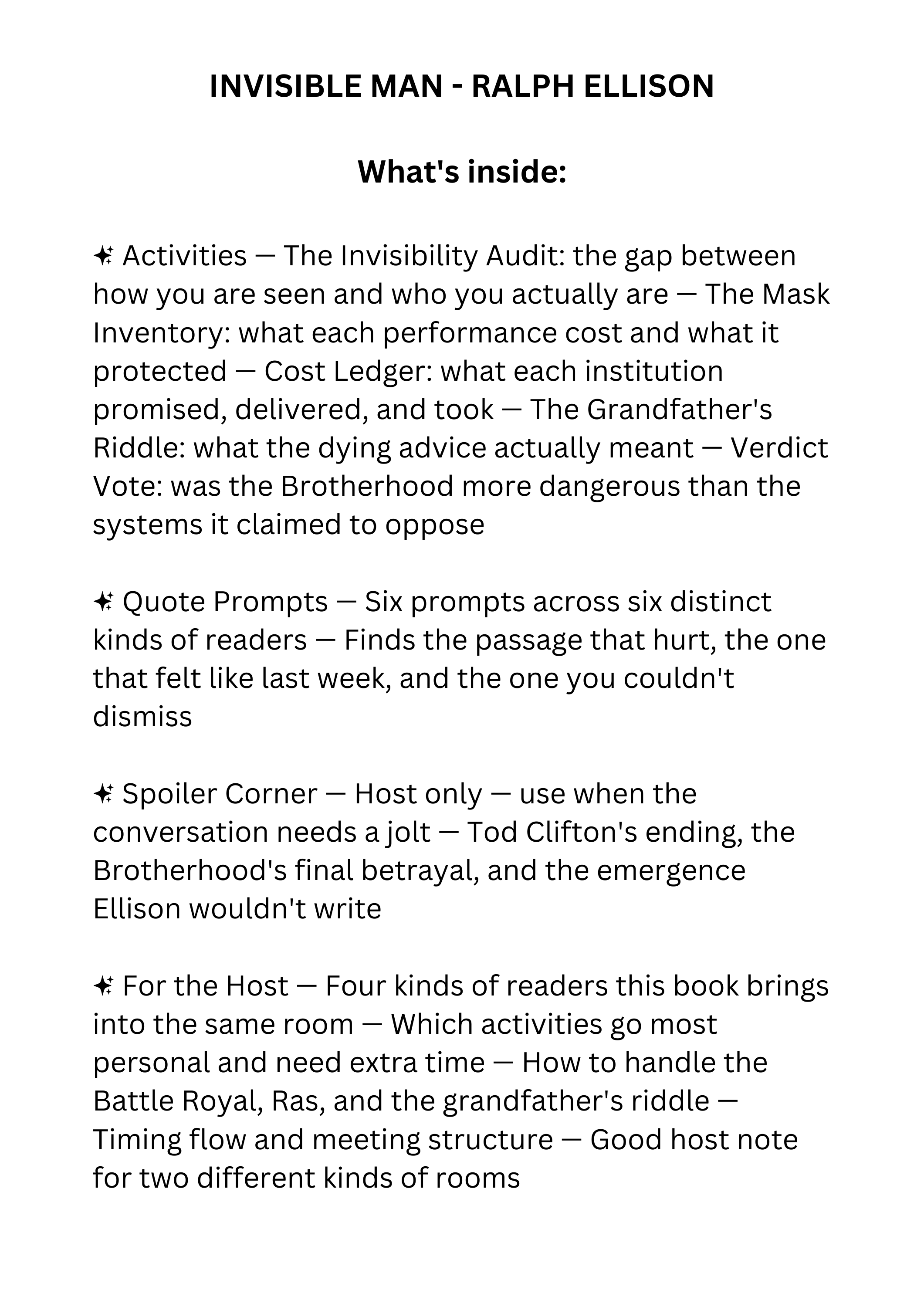 Image 4 of 4
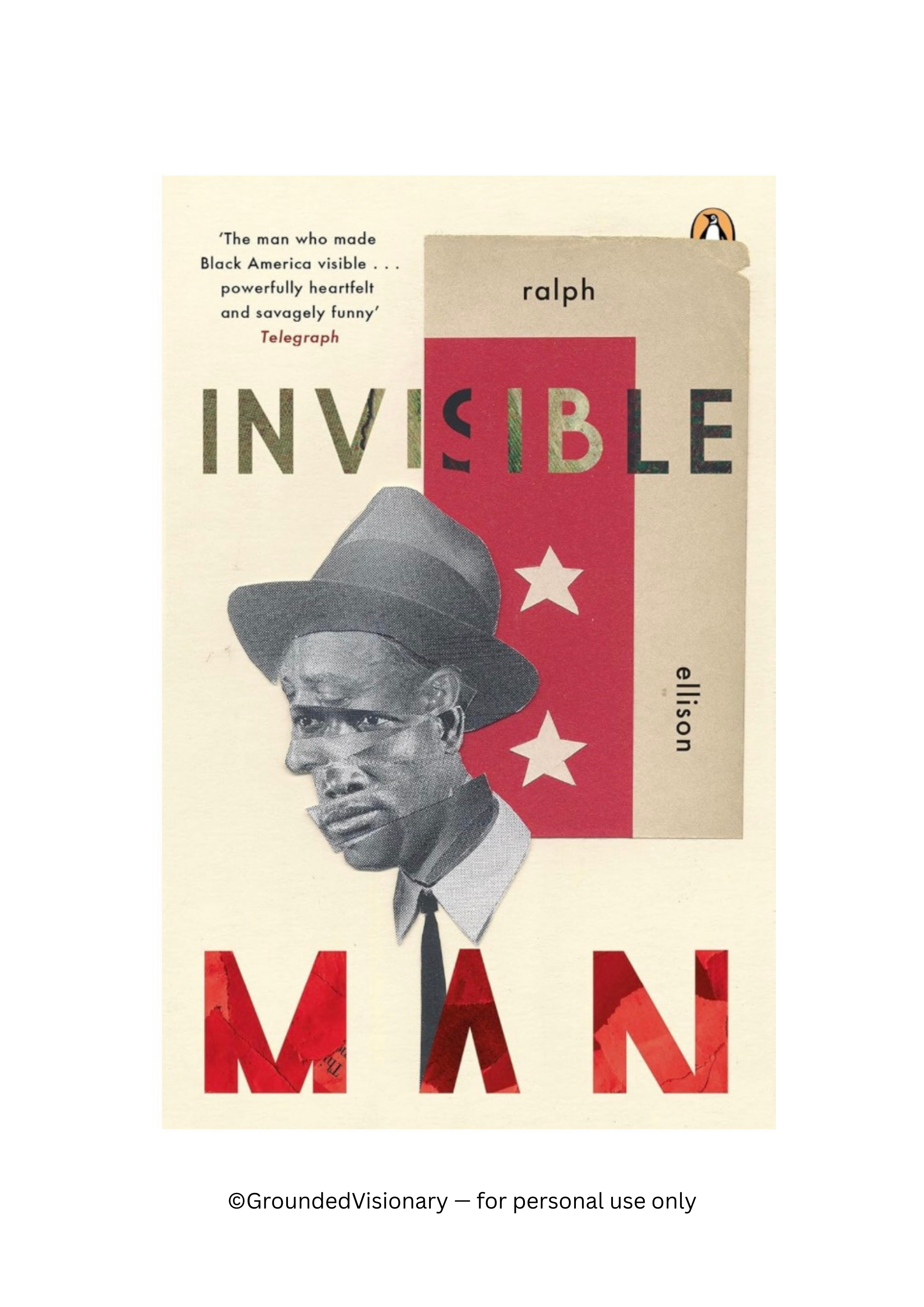
A powerful exploration of identity, invisibility, and what it means to be seen in America
Ralph Ellison published Invisible Man in 1952 and won the National Book Award the following year. That is not why you should read it. You should read it because it is one of the few novels that tells the truth about what it feels like to be a Black person in America who is doing everything right — and discovering that the people on the other side of every door were never actually looking at you. They were looking at what they needed you to be. Those are not the same thing.
The narrator of this novel has no name. He is brilliant, articulate, ambitious, and genuinely talented — and none of it protects him. Not from the white men who use him as entertainment. Not from the Black college president who shakes his hand and passes him letters designed to destroy him. Not from the progressive organization that gives him a platform and calls it liberation while using him as a tool. Every institution the narrator enters promises visibility and delivers a more sophisticated version of the same erasure. Ellison's argument is not that the system is broken. It is that the system is working exactly as designed — and that the most dangerous version of that system is the one that has learned to speak the language of liberation while running the same machinery underneath.
This kit was built to get the room past the plot and into that argument. Past the Battle Royal and into what it reveals about who was watching and why. Past Bledsoe's handshake and into what the letters actually said about who he was willing to sacrifice. Past the Brotherhood's platform and into what it was actually running underneath. The discussion goes personal. The activities go uncomfortable. The Verdict Vote asks the room to decide whether the Brotherhood was more dangerous to Black people in Harlem than the systems it claimed to oppose — and then defend that answer.
This kit was built for the room that needs somewhere to put what this book stirred up.
✦ What's Inside
✦ About This Book — What invisibility looks like when it isn't loud — Why the narrator has no name and what that costs him — Built for the room that needs somewhere to put what this book stirred up
✦ What This Book Is Really About — What ambition costs when the system was never going to reward it — Why progressive institutions cause a specific damage that outright opposition never could — The machinery running underneath the language of liberation
✦ Discussion Questions — Three Tiers — Three tiers: warmup through conversation-enders — The Battle Royal, Bledsoe's letters, and the Brotherhood's glass eye — What the grandfather's dying words actually meant — Closes with: What question did this book refuse to answer?
✦ Where This Book Leaves You — The underground as clarity or defeat — What is left when every institution has failed you — Whether the narrator ever actually sees clearly — and when
✦ Character on Trial — Dr. Bledsoe, Brother Jack, Ras the Exhorter — Prosecution/defense structure — Hard position questions with mandatory reversal — No neutral positions allowed
✦ Activities — The Invisibility Audit: the gap between how you are seen and who you actually are — The Mask Inventory: what each performance cost and what it protected — Cost Ledger: what each institution promised, delivered, and took — The Grandfather's Riddle: what the dying advice actually meant — Verdict Vote: was the Brotherhood more dangerous than the systems it claimed to oppose
✦ Quote Prompts — Six prompts across six distinct kinds of readers — The passage that hurt — The one that felt like last week — The one you couldn't dismiss
✦ Spoiler Corner — Host only — use when the conversation needs a jolt — Tod Clifton's ending, the Brotherhood's final betrayal, and the emergence Ellison wouldn't write
✦ For the Host — Four kinds of readers this book brings into the same room — How to handle the Battle Royal, Ras, and the grandfather's riddle — Timing flow and meeting structure — Good host note for two different kinds of rooms
✦ Bonus Host Guide — A free facilitation toolkit included with every purchase
Details — Instant download PDF — Personal and single-group use. No redistribution or resale. — Fan-created guide. Not affiliated with or endorsed by the Ralph Ellison estate or any publisher.
Licensing for classrooms, libraries, and educational programs is available. If you plan to use this guide for a class, reading program, or institutional setting, please contact the shop owner to arrange an appropriate license.
A powerful exploration of identity, invisibility, and what it means to be seen in America
Ralph Ellison published Invisible Man in 1952 and won the National Book Award the following year. That is not why you should read it. You should read it because it is one of the few novels that tells the truth about what it feels like to be a Black person in America who is doing everything right — and discovering that the people on the other side of every door were never actually looking at you. They were looking at what they needed you to be. Those are not the same thing.
The narrator of this novel has no name. He is brilliant, articulate, ambitious, and genuinely talented — and none of it protects him. Not from the white men who use him as entertainment. Not from the Black college president who shakes his hand and passes him letters designed to destroy him. Not from the progressive organization that gives him a platform and calls it liberation while using him as a tool. Every institution the narrator enters promises visibility and delivers a more sophisticated version of the same erasure. Ellison's argument is not that the system is broken. It is that the system is working exactly as designed — and that the most dangerous version of that system is the one that has learned to speak the language of liberation while running the same machinery underneath.
This kit was built to get the room past the plot and into that argument. Past the Battle Royal and into what it reveals about who was watching and why. Past Bledsoe's handshake and into what the letters actually said about who he was willing to sacrifice. Past the Brotherhood's platform and into what it was actually running underneath. The discussion goes personal. The activities go uncomfortable. The Verdict Vote asks the room to decide whether the Brotherhood was more dangerous to Black people in Harlem than the systems it claimed to oppose — and then defend that answer.
This kit was built for the room that needs somewhere to put what this book stirred up.
✦ What's Inside
✦ About This Book — What invisibility looks like when it isn't loud — Why the narrator has no name and what that costs him — Built for the room that needs somewhere to put what this book stirred up
✦ What This Book Is Really About — What ambition costs when the system was never going to reward it — Why progressive institutions cause a specific damage that outright opposition never could — The machinery running underneath the language of liberation
✦ Discussion Questions — Three Tiers — Three tiers: warmup through conversation-enders — The Battle Royal, Bledsoe's letters, and the Brotherhood's glass eye — What the grandfather's dying words actually meant — Closes with: What question did this book refuse to answer?
✦ Where This Book Leaves You — The underground as clarity or defeat — What is left when every institution has failed you — Whether the narrator ever actually sees clearly — and when
✦ Character on Trial — Dr. Bledsoe, Brother Jack, Ras the Exhorter — Prosecution/defense structure — Hard position questions with mandatory reversal — No neutral positions allowed
✦ Activities — The Invisibility Audit: the gap between how you are seen and who you actually are — The Mask Inventory: what each performance cost and what it protected — Cost Ledger: what each institution promised, delivered, and took — The Grandfather's Riddle: what the dying advice actually meant — Verdict Vote: was the Brotherhood more dangerous than the systems it claimed to oppose
✦ Quote Prompts — Six prompts across six distinct kinds of readers — The passage that hurt — The one that felt like last week — The one you couldn't dismiss
✦ Spoiler Corner — Host only — use when the conversation needs a jolt — Tod Clifton's ending, the Brotherhood's final betrayal, and the emergence Ellison wouldn't write
✦ For the Host — Four kinds of readers this book brings into the same room — How to handle the Battle Royal, Ras, and the grandfather's riddle — Timing flow and meeting structure — Good host note for two different kinds of rooms
✦ Bonus Host Guide — A free facilitation toolkit included with every purchase
Details — Instant download PDF — Personal and single-group use. No redistribution or resale. — Fan-created guide. Not affiliated with or endorsed by the Ralph Ellison estate or any publisher.
Licensing for classrooms, libraries, and educational programs is available. If you plan to use this guide for a class, reading program, or institutional setting, please contact the shop owner to arrange an appropriate license.