 Image 1 of 2
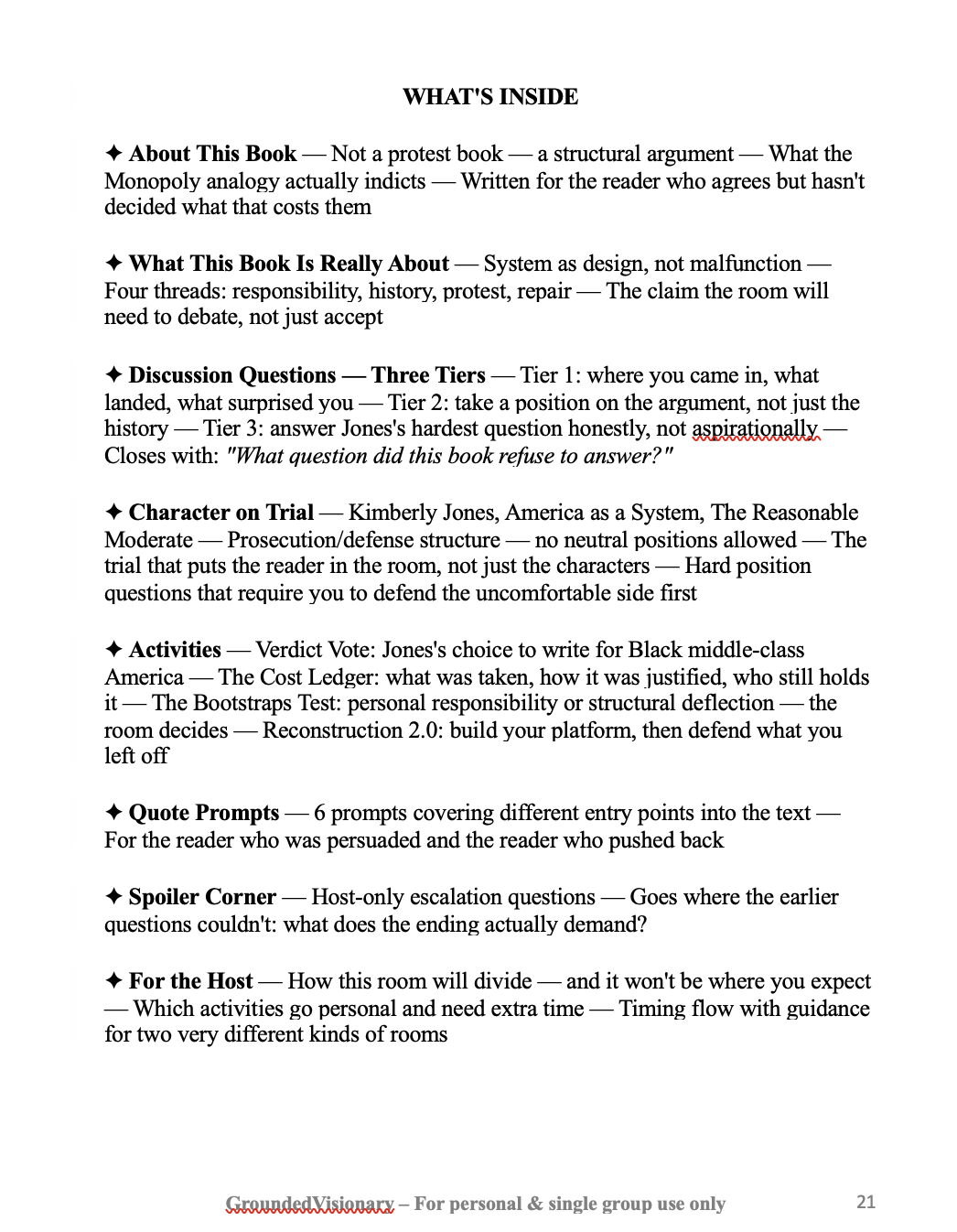 Image 2 of 2
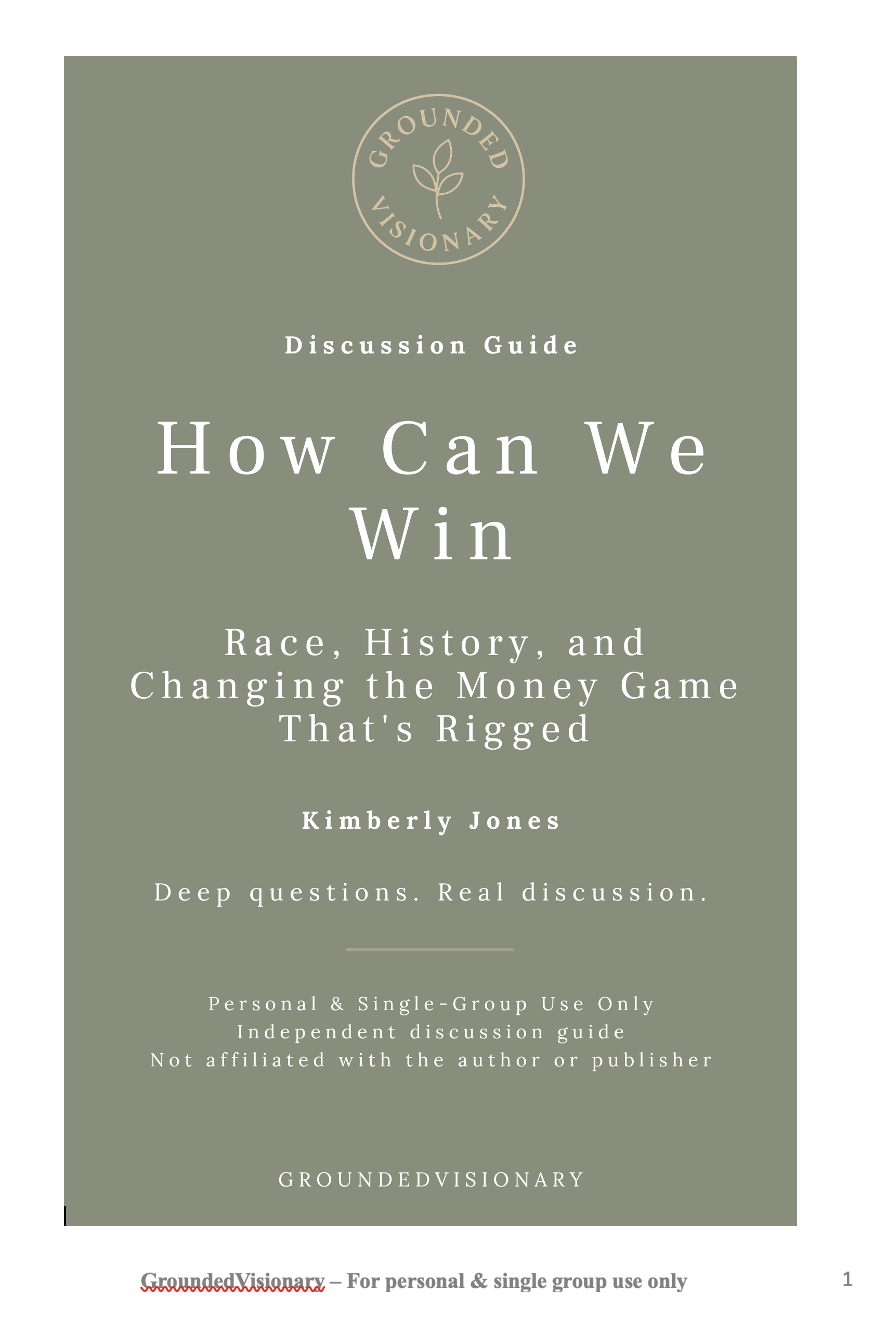
Kimberly Jones did not write a protest book. She wrote an indictment — and she built it around a Monopoly game. If you played four hundred rounds and had to hand over every dollar you earned, watched your properties get burned when you started winning, got penalized for resisting, and then got told you simply weren't trying hard enough — how would you win? That question is not rhetorical. It is the architecture of this book, and it is exactly the kind of question a room full of readers needs a guide built specifically to handle.
How We Can Win is short, urgent, and precise — 192 pages that connect slavery, Reconstruction's betrayal, Tulsa, redlining, mass incarceration, and present-day wealth inequality into a single, cumulative argument. Jones is not asking readers to feel bad about history. She is asking them to understand how the rules of American wealth were written, who wrote them, and who has been expected to play fairly ever since. That distinction — between feeling something and understanding something — is where most conversations about this book stall. This guide was built to push past the stall.
The discussion this book generates is not the one most groups expect. The room will not divide between people who believe racism is real and people who don't. It will divide between people who agree with Jones's diagnosis and people who agree with her diagnosis but resist her remedy — and that second conversation is the one worth having. This kit is designed to find that fault line early and follow it all the way to the end.
✦ About This Book & What It's Really About — What the Monopoly analogy actually indicts — System as design, not malfunction — The claim the room will need to debate, not just accept
✦ Discussion Questions — Three Tiers — Tier 1: where you came in, what landed, what surprised you — Tier 2: take a position on the argument, not just the history — Tier 3: answer Jones's hardest question honestly, not aspirationally — Closes with: "What question did this book refuse to answer?"
✦ Character on Trial — Kimberly Jones, America as a System, The Reasonable Moderate — Prosecution/defense structure — no neutral positions allowed — The trial that puts the reader in the room, not just the characters — Hard position questions that require you to defend the uncomfortable side first
✦ Activities — Verdict Vote: Jones's choice to write for Black middle-class America — The Cost Ledger: what was taken, how it was justified, who still holds it — The Bootstraps Test: personal responsibility or structural deflection — the room decides — Reconstruction 2.0: build your platform, then defend what you left off
✦ Quote Prompts — 6 prompts covering different entry points into the text — For the reader who was persuaded and the reader who pushed back
✦ Spoiler Corner — Host-only escalation questions — Goes where the earlier questions couldn't: what does the ending actually demand?
✦ For the Host — How this room will divide — and it won't be where you expect — Which activities go personal and need extra time — Timing flow with guidance for two very different kinds of rooms
Details: Instant download PDF. 20+ pages, print-ready. Licensed for personal and single-group use. Fan-created guide — not affiliated with or endorsed by Kimberly Jones or her publisher. Licensing for classrooms, libraries, and educational programs is available — contact the shop to arrange.
Kimberly Jones did not write a protest book. She wrote an indictment — and she built it around a Monopoly game. If you played four hundred rounds and had to hand over every dollar you earned, watched your properties get burned when you started winning, got penalized for resisting, and then got told you simply weren't trying hard enough — how would you win? That question is not rhetorical. It is the architecture of this book, and it is exactly the kind of question a room full of readers needs a guide built specifically to handle.
How We Can Win is short, urgent, and precise — 192 pages that connect slavery, Reconstruction's betrayal, Tulsa, redlining, mass incarceration, and present-day wealth inequality into a single, cumulative argument. Jones is not asking readers to feel bad about history. She is asking them to understand how the rules of American wealth were written, who wrote them, and who has been expected to play fairly ever since. That distinction — between feeling something and understanding something — is where most conversations about this book stall. This guide was built to push past the stall.
The discussion this book generates is not the one most groups expect. The room will not divide between people who believe racism is real and people who don't. It will divide between people who agree with Jones's diagnosis and people who agree with her diagnosis but resist her remedy — and that second conversation is the one worth having. This kit is designed to find that fault line early and follow it all the way to the end.
✦ About This Book & What It's Really About — What the Monopoly analogy actually indicts — System as design, not malfunction — The claim the room will need to debate, not just accept
✦ Discussion Questions — Three Tiers — Tier 1: where you came in, what landed, what surprised you — Tier 2: take a position on the argument, not just the history — Tier 3: answer Jones's hardest question honestly, not aspirationally — Closes with: "What question did this book refuse to answer?"
✦ Character on Trial — Kimberly Jones, America as a System, The Reasonable Moderate — Prosecution/defense structure — no neutral positions allowed — The trial that puts the reader in the room, not just the characters — Hard position questions that require you to defend the uncomfortable side first
✦ Activities — Verdict Vote: Jones's choice to write for Black middle-class America — The Cost Ledger: what was taken, how it was justified, who still holds it — The Bootstraps Test: personal responsibility or structural deflection — the room decides — Reconstruction 2.0: build your platform, then defend what you left off
✦ Quote Prompts — 6 prompts covering different entry points into the text — For the reader who was persuaded and the reader who pushed back
✦ Spoiler Corner — Host-only escalation questions — Goes where the earlier questions couldn't: what does the ending actually demand?
✦ For the Host — How this room will divide — and it won't be where you expect — Which activities go personal and need extra time — Timing flow with guidance for two very different kinds of rooms
Details: Instant download PDF. 20+ pages, print-ready. Licensed for personal and single-group use. Fan-created guide — not affiliated with or endorsed by Kimberly Jones or her publisher. Licensing for classrooms, libraries, and educational programs is available — contact the shop to arrange.